Nuova Simonelli Oscar II: A Cafe Machine Shrunk to a Counter
By Coffee Studies Editorial·Published October 17, 2026·6 min read
Quick answer
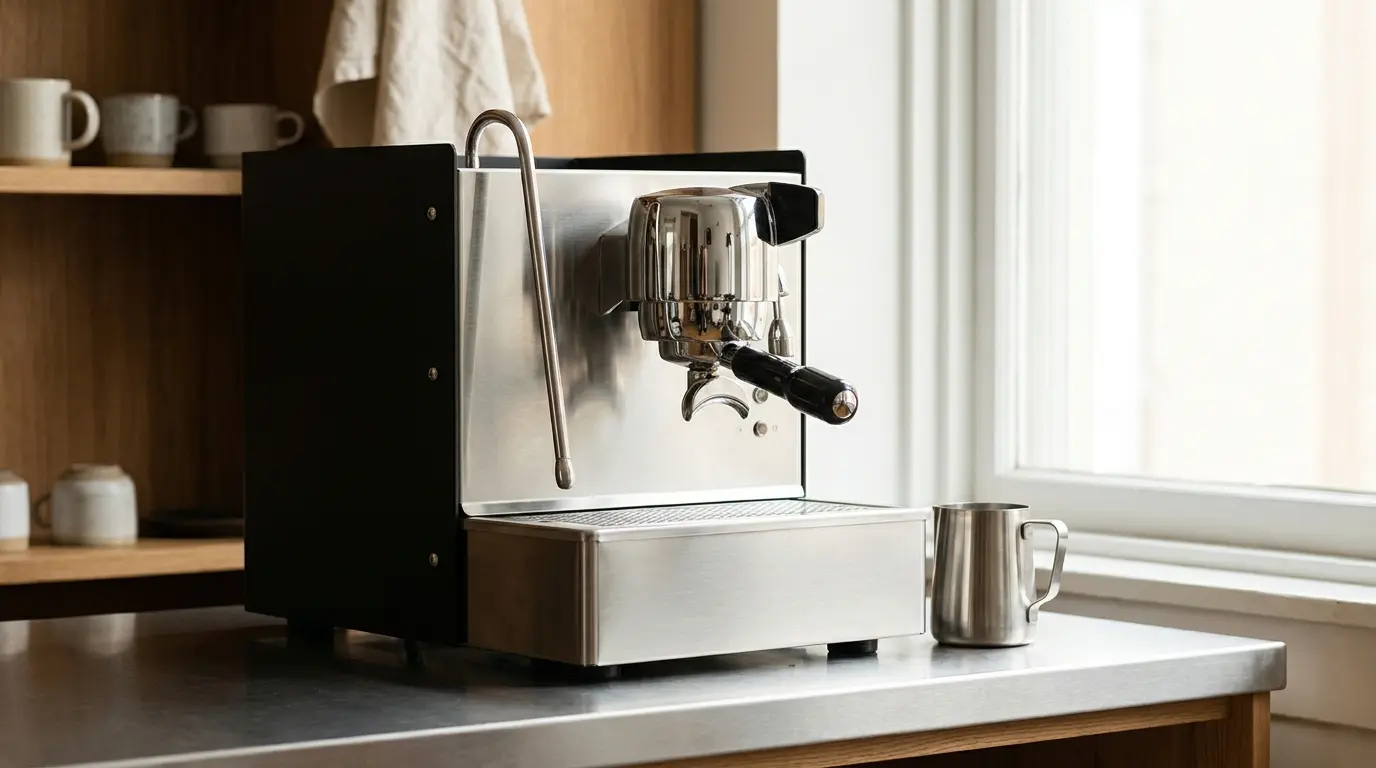
There is a gap between the best home espresso machines and the smallest cafe machines, and the Nuova Simonelli Oscar II sits in it. Nuova Simonelli builds commercial equipment; the Oscar is what happens when that engineering is packed into a single-group body that fits on a counter and runs, in its simplest version, from an ordinary socket.
It is not the machine most homes should buy. It is exactly the machine for a particular set of situations, and it is worth knowing which.
What it is
A single-group heat-exchanger machine with a boiler of roughly three litres, a 58 mm commercial portafilter, a commercial steam wand and a build intended to be opened and serviced rather than replaced.
The heat-exchanger part means one large boiler held at steam temperature, with brew water drawn through a pipe running inside it. That gives you steam and espresso at the same time from a single heating element, which is how cafe machines have worked for decades, and it carries the design's one habit: a short cooling flush before a shot when the machine has been sitting, because water that has been soaking in that pipe is hotter than coffee wants[3]. The full comparison of boiler designs is in dual boiler vs heat exchanger.
The three-litre boiler is the number that separates this from domestic machines. A Rancilio Silvia holds 0.3 litres; a Rocket Appartamento holds about 1.8. Three litres of water at steam pressure means the steam does not sag when you texture a second and third pitcher, and the machine does not need a recovery pause between drinks.
Pour-over or direct connect
The Oscar II is sold two ways, and the choice is about water supply rather than coffee.
Pour-over has a tank you fill by hand. It plugs in and goes anywhere there is a socket, which suits a home, a pop-up or a space where plumbing is not available.
Direct connect plumbs into a water line and refills itself. Anywhere the machine runs all day, this is the version you want, because nobody should be carrying jugs during service. Plumbing in also lets you put treated water in front of the machine, which is the single biggest factor in how long a boiler lasts in a hard-water area.
Who it is actually for
A household that makes a lot of milk drinks. Four or more a morning, every morning, with nobody waiting. The steam capacity is the point.
A small office. It survives being operated by people who did not read the manual, parts are standard, and a technician can service it. That profile is covered in more depth in espresso machine for the office.
A cart, kiosk or pop-up. The pour-over version in particular. It is the machine a lot of mobile setups run, because it is commercial enough to take the day and small enough to fit the counter.
A bar or restaurant with modest coffee volume. A venue where coffee is real but not the main business. For a shop where coffee is the business, a one-group Appia or a two-group machine is the right size, and that decision is laid out in choosing an espresso machine for a small coffee shop.
Not the average home. If you make one or two drinks a day, the Oscar is capacity you are paying to own and never use. A Rocket Appartamento or a Rancilio Silvia Pro X will be more pleasant on a kitchen counter and pull the same shot.
The Oscar II and its two domestic alternatives
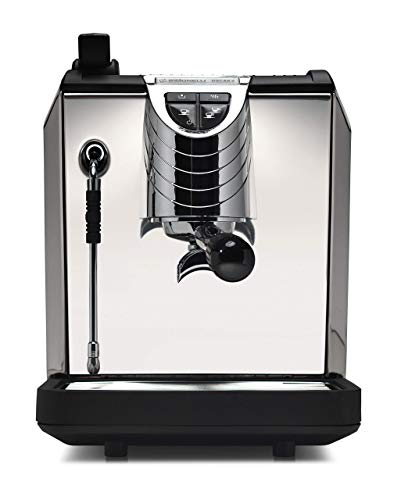 Commercial heat exchanger, single groupNuova Simonelli Oscar II Espresso MachineCafe engineering in a counter-sized body: a boiler of around three litres, a 58 mm commercial group and steam that does not sag across a run of drinks. Sold in a tank version and a plumb-in version. Confirm the electrical requirement of the exact version before buying.amazon.com $1,995.00 USDamazon.ca $3,385.36 CADPrice and availability as of View on Amazon
 Heat exchanger, E61 groupRocket Espresso Appartamento 2.0 Espresso Machine | Heat Exchanger | 1.8L | (White)The entry to the E61 heat exchanger: one copper boiler, brew and steam together, commercial fittings, a vibratory pump. No display and no PID; the brew temperature is set through the boiler and a short cooling flush before shots after idle is the one habit it asks.amazon.com $2,150.00 USDnot sold on amazon.caPrice and availability as of View on Amazon
 Dual boiler with PID, compactRancilio Silvia Pro X Espresso Machine, 1 liters, Stainless SteelTwo boilers on two controllers in a body only a little wider than the Silvia. Set temperature holds, steam is always ready, milk textures while the shot runs, and nothing needs adding. The smallest serious dual boiler made.amazon.com $2,195.00 USDamazon.ca $3,850.00 CADPrice and availability as of View on Amazon
Product prices and availability are accurate as of the date/time indicated and are subject to change. Any price and availability information displayed on Amazon at the time of purchase will apply to the purchase of this product. Certain content that appears on this site comes from Amazon. This content is provided ‘as is’ and is subject to change or removal at any time.
What it does not buy you
A better shot, by itself. Extraction is governed by pressure at the puck[1], which this machine delivers like any other pump machine, and by grind, which comes from a grinder you still have to buy[2]. A three-litre boiler changes what the machine can sustain, not what it can achieve on one cup.
It also does not buy you temperature control in the way a dual boiler does. Brew temperature is set indirectly through boiler pressure, as on any heat exchanger, and the flush is part of the routine.
Before you buy
Check the electrical requirement on the exact version. Machines in this class exist in several configurations, and some expect more current or a different supply than a normal kitchen socket provides. This is the most common reason a purchase at this size goes wrong, especially in an office or a cart where the circuit is already shared.
Decide tank or plumbed before you buy, not after. They are different models.
Budget for water treatment if you are plumbing it in. A commercial boiler in untreated hard water is a maintenance bill waiting to happen.
Budget for a grinder that matches it. A commercial machine fed by a domestic grinder is a bottleneck with a large boiler attached.
Common misconceptions
"It is a commercial machine, so it makes better coffee." It makes coffee for longer without flagging. The cup is set by grind, dose and beans.
"Three litres means slow to heat." It means slow to heat and slow to sag. Expect a longer warm-up than a domestic machine and plan to leave it on during a working session.
"Commercial means no maintenance." The opposite. It means maintenance is expected, documented and possible, which is why these last.
"The pour-over version is the home one and direct connect is the commercial one." They are both the same machine; the difference is plumbing, and plenty of busy homes plumb theirs in.
What we have and have not checked
The configuration, boiler capacity, group size and the existence of pour-over and direct-connect versions are from the maker's published specifications. Heat-exchanger behaviour, including the cooling flush, is intrinsic to the design. We have not bench-tested the machine or measured its steam recovery, and we deliberately do not state an electrical requirement here because it varies by version and region: confirm it on the listing and against your own socket. The product cards show live prices.
The honest summary
The Oscar II is cafe engineering in a counter-sized box: a three-litre boiler, a commercial group, steam that does not run out, and parts that a technician can replace. It asks for a cooling flush like any heat exchanger, a serious grinder like any espresso machine, and a careful look at the electrical spec before it arrives. Buy it for throughput and durability in a busy house, an office or a cart. Do not buy it expecting the shot itself to improve.
Frequently asked questions
- Is the Nuova Simonelli Oscar II a commercial machine?
- It is built by a commercial manufacturer from commercial parts and is widely used in carts, kiosks, offices and small bars, but it is a single-group machine with a modest boiler rather than a full cafe machine. For a shop pulling drinks continuously through a morning rush it is undersized; for a site making a few dozen drinks a day it is well matched. Treat it as the overlap between a serious home machine and the smallest commercial ones.
- What is the difference between the pour-over and direct-connect Oscar II?
- Where the water comes from. The pour-over version has a tank you fill by hand, so it can sit anywhere there is a socket. The direct-connect version plumbs into a water line and refills itself, which is what you want anywhere the machine runs all day and nobody should be carrying jugs. Plumbing in also lets you put a proper water treatment line in front of it, which matters more for scale and longevity than most buyers expect.
- Oscar II or Rocket Appartamento?
- Both are single-group heat exchangers around a similar price, and both brew and steam at once. The Appartamento is the more refined domestic object with an E61 group and a traditional look. The Oscar II is the more industrial one: a larger boiler, stronger steam, a plumb-in option and the build of a machine meant to be serviced in a shop. If the machine lives in a kitchen, most people prefer the Rocket. If it lives in an office, a cart or a busy household, the Oscar is the sturdier choice.
- Does the Oscar II need a cooling flush?
- Yes, like any heat exchanger. Brew water passes through a pipe inside a boiler held at steam temperature, so water that has been sitting in that pipe while the machine idles is too hot for coffee. A short flush before locking in the portafilter clears it. Pull shots in succession and the pipe stays fresh and you skip the flush. It is the standing habit of the design rather than a fault of this machine.
- What power does the Oscar II need?
- Check the specific version before buying, because machines in this class are sold in both standard household and higher-current configurations, and some commercial variants expect a dedicated circuit or a different voltage. This is the detail that most often derails a purchase at this size, particularly for a cart or an office where the outlet is already shared. Confirm the electrical requirement against the socket you intend to use.
- Is the Oscar II worth it over a cheaper home machine?
- Only for throughput and durability. The shot it pulls is not better than a well-dialled single boiler with a good grinder, because grind, dose and coffee set the ceiling. What it gives you is steam that does not run out, a boiler that does not sag over a run of drinks, parts a technician recognises, and a machine that does not mind being used all day. If none of those describe your mornings, you are buying capacity you will not use.
References
Every factual claim in this article is drawn from the sources below. See the source library for how we grade evidence.
- [1]Influence of Water Pressure on the Final Quality of Arabica Espresso CoffeeJournal of Agricultural and Food Chemistry · 2002 · Controlled trial · Tier 2 · Moderate
- [2]Brewing FundamentalsCoffee Science Foundation · Reference work · Tier 2 · Moderate
- [3]Effects of brew strength, brew yield, and roast on the sensory quality of drip brewed coffeeJournal of Food Science · 2020 · Controlled trial · Tier 2 · Moderate
Related reading
- Coffee EquipmentProsumer Espresso Machine: What the Word Means and Where It Starts→
- Coffee EquipmentDual Boiler vs Heat Exchanger: Which Espresso Machine Design Fits You→
- Coffee EquipmentRocket Appartamento: The Heat Exchanger Most People Start With→
- Coffee EquipmentRancilio Silvia vs Silvia Pro X: One Name, Two Different Machines→
- Coffee EquipmentEspresso Machine for an Office: Match the Machine to Who Refills It→
- Brewing ScienceEspresso Machine Buying Guide: Choosing the Right Type→