Espresso Machine for an Office: Match the Machine to Who Refills It
By Coffee Studies Editorial·Published October 17, 2026·6 min read
Quick answer
Office coffee is not a coffee problem. The machine that makes the best espresso is not the machine that survives a Monday morning with thirty people, half of whom have never used a portafilter and none of whom will descale anything. Choosing well means being honest about who operates it and who maintains it, and only then about what it makes.
The question that decides it
Before comparing machines, answer this: who empties the drip tray?
If the answer is a named person who is interested in coffee and will clean the machine, you can buy a traditional machine and get genuinely good drinks out of it. If the answer is "someone will", you need a machine that is difficult to abuse and that prompts for its own maintenance, which means a super-automatic or a serviced commercial machine on a contract.
Nearly every office machine that ends up unloved and scaled up was bought by someone who answered this question optimistically.
Three machines, three offices
Super-automatic bean-to-cup. One button grinds, doses, brews and textures milk, drops the puck into an internal drawer and prompts you when it needs cleaning. There is no technique to teach and no way to make a mess with a portafilter. It is the right machine for most offices under about twenty people, and the reason has nothing to do with the cup: it is the only category where a new starter can make a latte on day one without help.
Prosumer traditional machine. A real portafilter, a steam wand and a boiler, which means better drinks for whoever can use it and a queue behind whoever cannot. This works in small teams with a resident coffee person, in design studios and agencies where someone cares, and nowhere else. The Breville Oracle Jet sits in an interesting middle here, because it grinds, tamps and textures automatically but still uses a portafilter, so it tolerates a mixed crowd better than a manual machine does.
Small commercial. A single-group commercial machine such as the Nuova Simonelli Oscar II, usually plumbed in, usually with a service relationship behind it. This is for offices with real volume, client-facing coffee, or a reception area where the machine is part of the impression. It is built to run all day and to be repaired rather than replaced, and it expects a grinder beside it.
One machine from each of the three office profiles
 Bean-to-cup, one buttonPhilips 2200 Series Fully Automatic Espresso Machine, Classic Milk Frother, 2 Coffee Varieties, Intuitive Touch Display, 100% Ceramic Grinder, AquaClean Filter, Aroma Seal, Black (EP2220/14)Grinds, doses, brews and drops the puck into an internal drawer with no portafilter to misuse and no technique to teach, which is why this category suits an office rather than because of the cup. Prompts for its own cleaning, which is the half of the job offices forget.amazon.com $389.00 USDamazon.ca $549.99 CADPrice and availability as of View on Amazon
 Bean-to-cup with milk systemDe'Longhi Magnifica Duo Automatic Espresso Machine, Milk Frother, Silver | #1 Worldwide Espresso Machine Maker, 20 One-Touch Recipes, Hot & Cold Milk Frother, Built-In Grinder, Touchscreen DisplayThe same push-button proposition a step up, with a milk system for offices where most drinks are milk drinks. The milk path needs its cleaning cycle run or it becomes the reason people stop using the machine, so name whoever owns that before it arrives.amazon.com $999.95 USDamazon.ca $1,299.99 CADPrice and availability as of View on Amazon
 Automated, on-demand heating, cold modesBreville BES985BSS Oracle Jet Espresso Machine, Brushed Stainless Steel | Automatically brew barista-quality lattes, cappuccinos and cold brew at home with this coffee maker with built-in grinderGrinds, doses, tamps and textures milk from a touchscreen, and is ready in seconds because it heats on demand rather than holding a boiler. The trade is steaming after the shot with a little less power. The only Breville with cold extraction modes.amazon.com $1,979.99 USDamazon.ca $2,999.99 CADPrice and availability as of View on Amazon
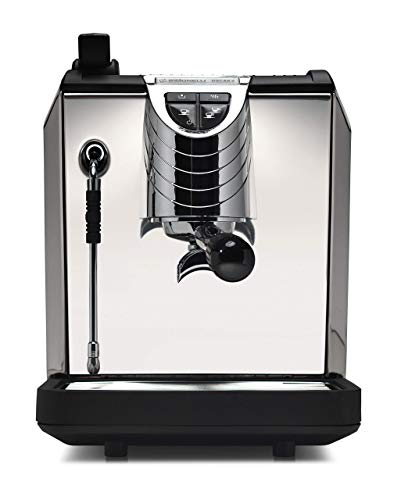 Commercial heat exchanger, single groupNuova Simonelli Oscar II Espresso MachineCafe engineering in a counter-sized body: a boiler of around three litres, a 58 mm commercial group and steam that does not sag across a run of drinks. Sold in a tank version and a plumb-in version. Confirm the electrical requirement of the exact version before buying.amazon.com $1,995.00 USDamazon.ca $3,385.36 CADPrice and availability as of View on Amazon
Product prices and availability are accurate as of the date/time indicated and are subject to change. Any price and availability information displayed on Amazon at the time of purchase will apply to the purchase of this product. Certain content that appears on this site comes from Amazon. This content is provided ‘as is’ and is subject to change or removal at any time.
Size for the queue, not the headcount
A machine that makes forty drinks across a day is not the same as a machine that makes fifteen between 8:50 and 9:10. Offices have peaks, and the peak is what people remember.
A domestic super-automatic will make a drink roughly every ninety seconds including milk, which is fine spread across a day and painful in a queue. A prosumer heat exchanger brews and steams simultaneously, which roughly halves the time per milk drink during a rush. A commercial machine with a large boiler simply does not slow down.
If your office has a predictable rush, size for it. If coffee is spread through the day, the cheaper machine is genuinely adequate.
The things that actually break office machines
Water. Scale is the main killer of any machine with a boiler, and office machines get descaled late or never. If you are plumbing in, put a treatment line in front of it. If you are not, descale on a schedule tied to your water hardness rather than to when it starts tasting odd.
Milk. Automatic milk systems need their cleaning cycle run, and in an office nobody volunteers. Super-automatics with a removable milk carafe are easier to keep honest because the carafe goes in a fridge and gets noticed.
Beans sitting in the hopper. A full hopper of beans going stale over three weeks will undo everything else. Buy smaller bags more often, because freshness moves the cup more than most hardware choices[1].
Nobody owning it. The recurring failure. Name the person.
Buy or lease
Most of what you find searching for office coffee machines is a leasing or service company, not a product. That is worth understanding rather than resenting: a lease bundles the machine with servicing, descaling, repairs and often beans, which solves the maintenance problem by contract instead of by goodwill.
Buying is cheaper across a few years and leaves you free on beans. It is the right choice when somebody internally will genuinely own the machine. Leasing is the right choice when nobody will, and the honest version of that decision is usually obvious in advance.
This article is about the buying path, because that is the one where choosing the right machine matters.
What the machine will not fix
The grinder, on any traditional machine. Grind consistency drives extraction more than any other part of the setup, and a commercial machine fed by a cheap grinder is a bottleneck with a large boiler attached. A super-automatic has its grinder built in, which is part of why it suits an office: the grinder is sized to the machine and nobody can set it wrong.
Pressure is also not the differentiator people expect. All of these machines deliver roughly the brewing pressure espresso needs[2]. What separates them is how many drinks they make before flagging and how badly they tolerate being operated by someone in a hurry.
Common misconceptions
"A better machine makes the office coffee better." A maintained machine makes the office coffee better. An unmaintained prosumer machine is worse than a maintained bean-to-cup.
"Bean-to-cup is not real espresso." It is espresso made by a machine instead of a person, from the same pressure and the same beans. It is beaten by a skilled hand, not by an average one.
"Plumbing it in is a luxury." It is the difference between a machine someone refills and a machine nobody refills.
"Buy the biggest machine the budget allows." Buy the machine that matches the queue and the maintenance. Excess capacity scales up and sits idle.
What we have and have not checked
The machine categories and their trade-offs are general and apply across brands; the specific machines on the product cards are chosen as examples of each category and their prices and availability are live. We have not tested any of them in an office, have not measured drinks per hour, and deliberately give no electrical or plumbing specification here because it varies by model and region. Confirm power and water requirements against the listing and the room before buying.
The honest summary
Pick the machine that matches who uses it and who cleans it. Most offices are best served by a super-automatic, because it removes technique and prompts for its own care. Offices with a resident coffee person can run a prosumer machine and will drink better for it. Offices with volume or clients should buy small commercial and plumb it in. Then name the person who owns the drip tray, because that decision outlives the machine you choose.
Frequently asked questions
- What is the best coffee machine for a small office?
- For most offices under about twenty people, a super-automatic bean-to-cup machine: it grinds, doses, brews and textures milk from one button, so nobody needs training and there is no portafilter to misuse. Above that headcount, or where coffee is served to clients, a small commercial machine with a plumbed water line and a service contract makes more sense because it is built to run all day and be repaired rather than replaced.
- Should an office buy or lease a coffee machine?
- Leasing bundles the machine with servicing, descaling and often beans, which is why most of the companies you find searching for office coffee machines are selling a contract rather than a product. That is genuinely useful if nobody internally will maintain the machine. Buying is cheaper over a few years and leaves you free to choose beans, but only if someone owns the job of cleaning and descaling it. The maintenance question decides this, not the price.
- Do office espresso machines need plumbing?
- Not necessarily. Super-automatics and most prosumer machines use a tank you refill by hand, which suits a kitchen with a sink nearby. Plumbing in matters once the machine runs all day and refilling becomes somebody's chore, and it allows a water treatment line in front of the machine, which is the main thing that determines how long a boiler survives in a hard-water area. Small commercial machines are commonly sold in both tank and plumbed versions.
- How many people can one office espresso machine serve?
- Treat it as a throughput question rather than a headcount. A domestic super-automatic is comfortable making a few dozen drinks across a day but will be slow at a 9am queue. A prosumer heat exchanger keeps up with a short rush because it steams and brews at once. A small commercial machine with a three-litre boiler handles a continuous run. If people queue at predictable times, size for the queue, not for the daily total.
- Who maintains an office coffee machine?
- Somebody has to, and if nobody is named it will be nobody. The recurring jobs are emptying grounds and drip trays, backflushing or running the cleaning cycle, descaling on a schedule that depends on your water, and refilling beans. A super-automatic reduces this to emptying a puck drawer and following prompts. A traditional machine with a portafilter needs a person who will actually backflush it. Name the person before you buy the machine.
- Is a bean-to-cup machine good enough for an office?
- For most offices, yes, and the reasons are practical rather than about the cup. There is no portafilter to pack badly, no steam wand technique to learn, no training for new starters, and the machine stops people making a mess. A traditional machine in skilled hands makes a better drink, but an office is not skilled hands, it is forty pairs of them with different levels of interest.
References
Every factual claim in this article is drawn from the sources below. See the source library for how we grade evidence.
- [1]Brewing FundamentalsCoffee Science Foundation · Reference work · Tier 2 · Moderate
- [2]Influence of Water Pressure on the Final Quality of Arabica Espresso CoffeeJournal of Agricultural and Food Chemistry · 2002 · Controlled trial · Tier 2 · Moderate
Related reading
- Coffee EquipmentNuova Simonelli Oscar II: A Cafe Machine Shrunk to a Counter→
- Coffee EquipmentBreville Oracle Jet vs Oracle Touch: Fast Heater or Two Boilers→
- Brewing ScienceEspresso Machine Buying Guide: Choosing the Right Type→
- Coffee EquipmentCompact Espresso Machines: What Fits, and What You Give Up→
- Coffee EquipmentHow to Clean an Espresso Machine: The Full Guide→
- Coffee EquipmentCoffee Machine Descaler: What It Is and What It Fixes→