E61, PID and Pumps: Reading an Espresso Machine Spec Sheet
By Coffee Studies Editorial·Published October 17, 2026·7 min read
Quick answer
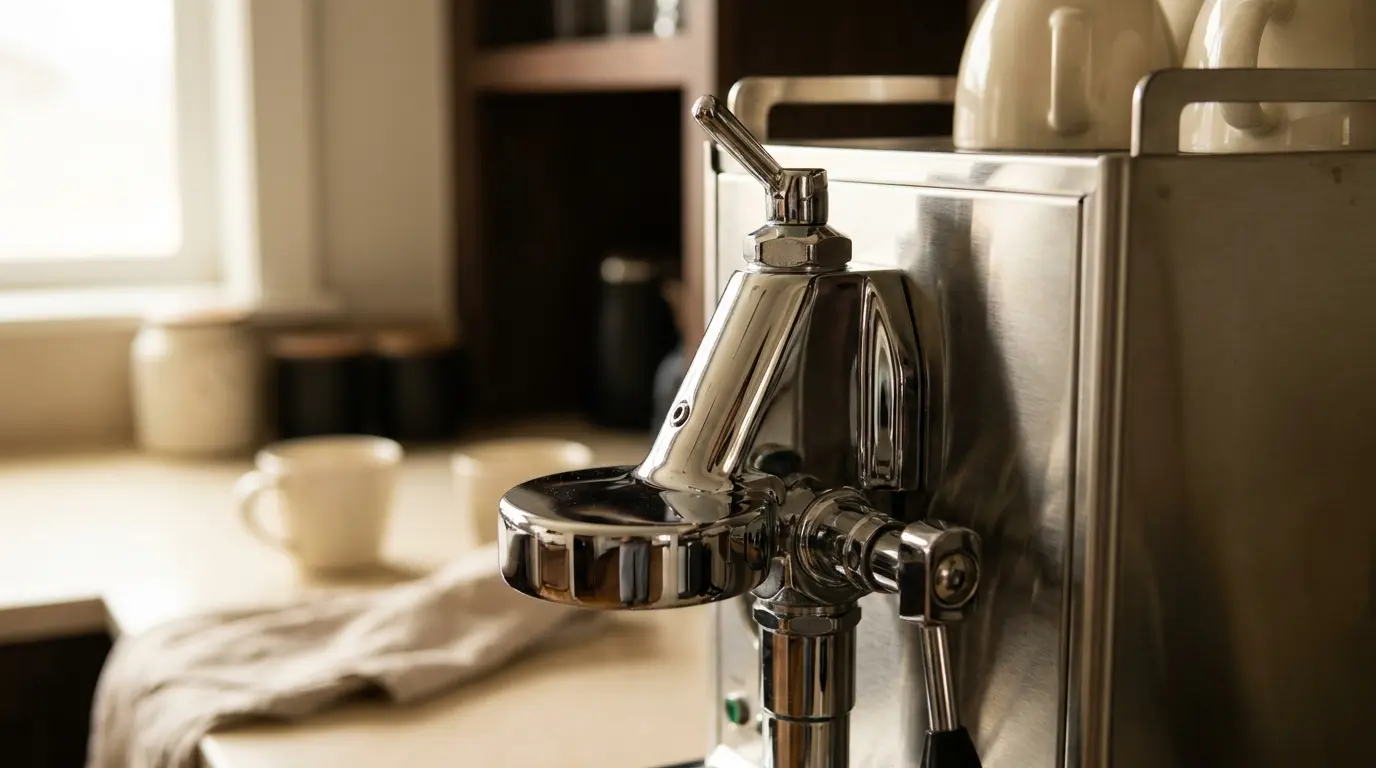
Espresso machine listings are written in a shorthand that assumes you already know it. E61, PID, rotary, fifteen bar, OPV, thermosiphon. Three of those specifications carry most of the meaning, one of them is mostly marketing, and knowing which is which makes the whole category easier to shop.
This page is about the group, the controller and the pump. The boiler, which is the fourth decision and arguably the biggest, has its own page: dual boiler vs heat exchanger.
The E61 group
In 1961 Faema released a machine called the E61, and its brew group turned out to be good enough that the patent lapsing made it an industry standard. Most prosumer machines you can buy today use a version of it, which is why they all have the same chrome dome and the same lever on the front.
Two things make it worth knowing about.
Mass. It is a heavy chromed brass casting. Water passing through it is buffered by all that metal, so small fluctuations upstream are evened out before the water reaches the puck. A light, cold group pulls heat out of the water on the way through and the first shot of the morning suffers for it.
The thermosiphon. The group is plumbed to the boiler in a loop, and because hot water rises, water circulates through that loop continuously without a pump. The group is therefore kept at working temperature by the boiler at all times rather than warming up when you pull. This is why E61 machines want fifteen or twenty minutes from cold and then hold steady all session.
The lever on the front is not decorative. On most E61 machines, lifting it part way opens a pre-infusion path that wets the puck at line or low pressure before full pump pressure arrives, which evens out extraction across the coffee bed.
What an E61 does not do is change the pressure your shot sees, which is the variable that governs extraction most[1]. It also is not a requirement for good espresso: every compact dual boiler uses a different group design and some of them are excellent. E61 is a well-proven standard, not a grade.
PID, and what it actually controls
A thermostat is a switch. It turns the element on below a temperature and off above it, and the gap between those two points is several degrees wide. On a machine with a thermostat, the water temperature at any moment depends on where in that cycle you happen to be, which is why single-boiler owners learned to time their shots off the heating light.
A PID is a controller that reads temperature continuously and pulses the element to hold a set point, typically within about a degree. Brew temperature moves the balance of a shot between sour and bitter[2], so holding it steady removes a variable you would otherwise be managing by stopwatch.
Where it matters depends entirely on the boiler design:
On a single boiler, it is the upgrade that changes the machine. The Gaggia Classic and the Rancilio Silvia are both commonly fitted with one for this reason.
On a dual boiler, it is standard and uninteresting, because holding two set points is the entire premise of the design.
On a heat exchanger, it is widely misunderstood. A heat exchanger holds no brew water; brew water is heated in transit through a pipe. So the PID is controlling the steam boiler, which influences brew temperature indirectly and makes the cooling flush more predictable. That is genuinely useful, and it is not the same thing as controlling your shot temperature. This is the difference between the Rocket Appartamento and its PID-equipped siblings.
Pump type: a plumbing decision
Vibratory pumps are small electromagnetic pumps, cheap, light and loud. They draw from a tank. Nearly every machine under about two and a half thousand dollars uses one, including excellent ones.
Rotary pumps are motor-driven, quieter, smoother, heavier and more expensive, and crucially they can be connected to a mains water line so the machine refills itself.
Both deliver the pressure espresso needs. The decision is about noise and about whether you want to plumb the machine in, which matters in an open-plan kitchen or anywhere the machine runs all day. It is not a quality decision about the cup, and a machine is not better because the listing says rotary.
The bar number is mostly marketing
Machines advertise fifteen bar, nineteen bar, twenty bar. Espresso is conventionally pulled at around nine bar at the puck, and the number on the box is the pump's unrestricted maximum rather than what the coffee sees.
What actually sets brew pressure is the over-pressure valve, a spring-loaded bleed that dumps anything above its set point. Some machines ship with it set well above nine bar, which gives fast harsh shots, and lowering it with a cheaper spring is one of the most common modifications on entry-level machines. The Gaggia Classic Evo Pro ships at roughly nine bar where its predecessor did not, which is one of the genuine differences between those two versions.
So a higher bar rating is not better. Nine at the puck is the target, and a machine that reaches it cleanly beats one that advertises twenty.
Flow control, briefly
Some E61 machines accept a flow control device in place of the standard lever assembly, letting you throttle water flow by hand during the shot and therefore shape pressure as it runs. It is the expensive route to what a lever machine such as the La Pavoni Europiccola produces by physics, and the cheaper route is a machine built around profiling from the start.
It is a refinement for someone who has already settled grind, dose and temperature. It is not a fix for an inconsistent setup, because grind drives extraction ahead of anything the machine contributes[3].
Reading three real machines
E61 with PID, E61 without, and PID without E61
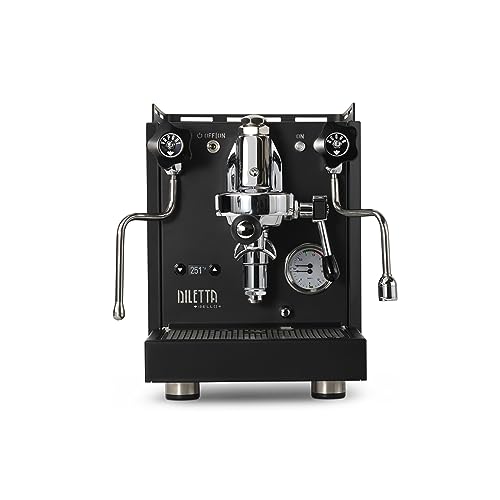 Heat exchanger, E61, PIDDiletta Bello+ Espresso Machine | E61 | PID Temperature Control | Shot Timer | Programmable Preinfusion | Handmade In Italy (Black)An E61 heat exchanger with a PID governing the boiler, which is the same arrangement as the Rocket Mozzafiato at a lower price. Brews and steams together; the cooling flush habit applies.amazon.com $2,149.00 USDnot sold on amazon.caPrice and availability as of View on Amazon
 Heat exchanger, E61 groupRocket Espresso Appartamento 2.0 Espresso Machine | Heat Exchanger | 1.8L | (White)The entry to the E61 heat exchanger: one copper boiler, brew and steam together, commercial fittings, a vibratory pump. No display and no PID; the brew temperature is set through the boiler and a short cooling flush before shots after idle is the one habit it asks.amazon.com $2,150.00 USDnot sold on amazon.caPrice and availability as of View on Amazon
 Dual boiler with PID, compactRancilio Silvia Pro X Espresso Machine, 1 liters, Stainless SteelTwo boilers on two controllers in a body only a little wider than the Silvia. Set temperature holds, steam is always ready, milk textures while the shot runs, and nothing needs adding. The smallest serious dual boiler made.amazon.com $2,195.00 USDamazon.ca $3,850.00 CADPrice and availability as of View on Amazon
Product prices and availability are accurate as of the date/time indicated and are subject to change. Any price and availability information displayed on Amazon at the time of purchase will apply to the purchase of this product. Certain content that appears on this site comes from Amazon. This content is provided ‘as is’ and is subject to change or removal at any time.
The Diletta Bello+ is an E61 heat exchanger with a PID on the boiler: classic group, one boiler, flush habit, predictable temperature. The Rocket Appartamento is an E61 heat exchanger without a PID: same group and same habit, temperature set through boiler pressure instead. The Rancilio Silvia Pro X has no E61 at all and two PID-controlled boilers: a set temperature with no flush, in a smaller footprint.
Three specifications, three different machines, none of them better than the others in the cup.
Common misconceptions
"E61 is the best group." It is the most common and most proven. It is not a grade, and it does not suit every design.
"PID means accurate shot temperature." On a single or dual boiler, broadly yes. On a heat exchanger it controls the steam boiler, not the brew water.
"Rotary pumps make better espresso." They make quieter espresso and allow plumbing in.
"Nineteen bar is more powerful." It is a pump specification. Nine bar at the puck is the target and the OPV is what sets it.
What we have and have not checked
The descriptions of the E61 group, PID control, pump types and the over-pressure valve are general engineering characteristics documented across the category rather than measurements we have taken. Individual machines implement each of them differently, and specifics such as the factory OPV setting vary by model and production year, so check the listing for the machine you are buying. We have not bench-tested the machines used as examples. The product cards show live prices.
The honest summary
The E61 is a heavy, self-heating group that steadies temperature and takes a standard portafilter. A PID holds a set temperature and is transformative on a single boiler, standard on a dual boiler, and indirect on a heat exchanger. Pump type decides noise and plumbing, not quality. And the bar number on the box is the pump, not your shot: nine at the puck is what matters, and the over-pressure valve is what sets it.
Frequently asked questions
- What is an E61 group head?
- A brew group designed by Faema in 1961 and now made under licence by many manufacturers. It is a heavy chromed brass casting with a lever that opens the shot, and it contains a thermosiphon loop: water circulates continuously between the boiler and the group so the group stays at working temperature instead of cooling between drinks. That mass and that circulation are the point. It takes a standard 58 mm portafilter and it is the reason most prosumer machines look alike.
- Does an E61 group make better espresso?
- It makes more thermally stable espresso than an unheated group, because a heavy brass casting at a steady temperature does not pull heat out of the water on its way to the coffee. It does not change the pressure at the puck and it does not improve on a well-controlled dual boiler with a different group design. Plenty of excellent machines, including every compact dual boiler, use something other than an E61.
- What does a PID do on an espresso machine?
- It replaces a simple thermostat with a feedback controller that reads the temperature continuously and pulses the heating element to hold a set point, typically within about a degree. On a single boiler this is transformative, because a thermostat drifts across several degrees and the shot you get depends on when in that cycle you pull it. On a dual boiler it is standard. On a heat exchanger it controls the steam boiler rather than the brew water, because a heat exchanger holds no brew water to control.
- Is a PID worth it?
- On a single boiler, it is the single upgrade that changes the machine, because brew temperature is otherwise a moving target you have to time. On a dual boiler it is already there. On a heat exchanger it makes the machine's behaviour more predictable and the cooling flush more consistent, which is useful but not transformative. So the answer depends entirely on which boiler design you are asking about.
- Vibratory pump or rotary pump?
- It is a noise and plumbing decision, not a coffee one. Both deliver the pressure espresso needs. A vibratory pump is small, cheap and loud, and draws from a tank. A rotary pump is quieter, smoother, heavier, more expensive, and can be connected to a water line so the machine refills itself. If the machine lives in an open-plan kitchen or runs all day somewhere nobody should be carrying jugs, the rotary pump earns its premium.
- What is an OPV and why does nine bar matter?
- The over-pressure valve bleeds off pressure above a set point, so the pump's maximum is not what reaches the coffee. Espresso is conventionally pulled at around nine bar at the puck, and machines advertising fifteen or nineteen bar are quoting the pump rather than the brew pressure. Some machines ship with the valve set high, which produces harsh fast shots, and lowering it is a common and cheap modification on entry machines.
References
Every factual claim in this article is drawn from the sources below. See the source library for how we grade evidence.
- [1]Influence of Water Pressure on the Final Quality of Arabica Espresso CoffeeJournal of Agricultural and Food Chemistry · 2002 · Controlled trial · Tier 2 · Moderate
- [2]Effects of brew strength, brew yield, and roast on the sensory quality of drip brewed coffeeJournal of Food Science · 2020 · Controlled trial · Tier 2 · Moderate
- [3]Brewing FundamentalsCoffee Science Foundation · Reference work · Tier 2 · Moderate
Related reading
- Coffee EquipmentDual Boiler vs Heat Exchanger: Which Espresso Machine Design Fits You→
- Coffee EquipmentProsumer Espresso Machine: What the Word Means and Where It Starts→
- Coffee EquipmentRocket Appartamento: The Heat Exchanger Most People Start With→
- Coffee EquipmentDiletta Espresso Machines: Bello, Bello Plus and Alto Compared→
- Coffee EquipmentRancilio Silvia vs Silvia Pro X: One Name, Two Different Machines→
- Brewing ScienceEspresso Machine Buying Guide: Choosing the Right Type→