Rancilio Silvia vs Silvia Pro X: One Name, Two Different Machines
By Coffee Studies Editorial·Published October 17, 2026·7 min read
Quick answer
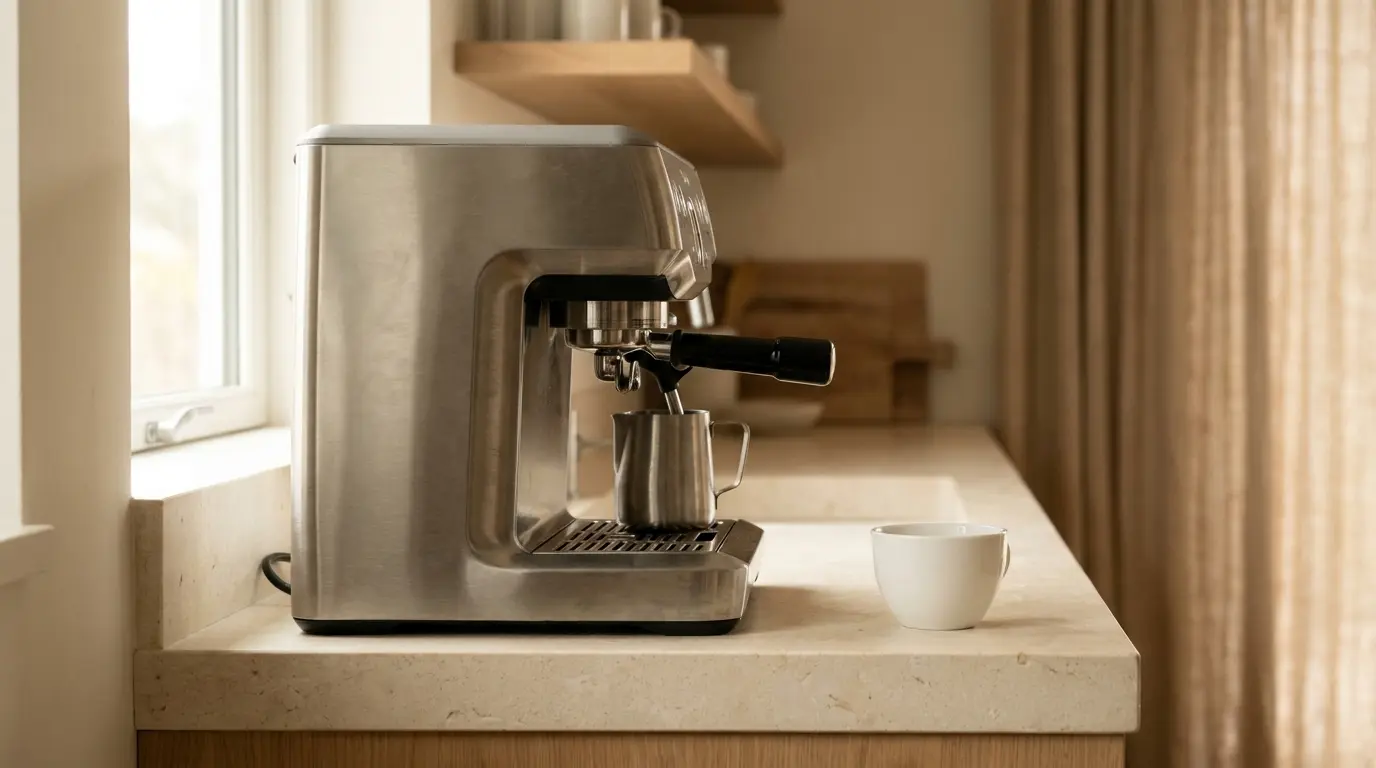
Rancilio sells two machines under the Silvia name, and the name is doing a lot of work. They share a footprint, a frame, a 58 mm group and a reputation. Inside, they are different categories of machine, and the price gap between them is the clearest illustration anywhere of what a second boiler and a controller actually buy you.
The Silvia: a single boiler built like a tank
The Silvia has been the serious single-boiler machine since the late 1990s, and it has changed less in that time than almost anything else in the kitchen. The current version is still a 0.3 litre brass boiler, a heavy iron frame with stainless panels, a commercial 58 mm group and portafilter, a three-way solenoid so the puck comes out dry and the machine can be backflushed, and a steam wand that produces properly dry steam from a boiler under pressure.
Those are not small things at the price. The boiler is roughly three times the size of the one in the Gaggia Classic, which means more thermal mass, more stable temperature across a shot, and stronger steam. The frame weighs what a commercial component weighs. Nothing in it is proprietary; the pump, element, solenoid and gaskets are standard parts that a technician will still be fitting in fifteen years.
What it does not have is any idea what its own temperature is. A thermostat cycles the element across a band of several degrees, and the shot you pull depends on where in that cycle you are. Espresso temperature decides whether the extraction leans sour or bitter[3], so Silvia owners either learn to temperature surf, timing the pull off the heating light, or fit a PID controller. The PID is a well-trodden modification on this machine, sold as a kit and sometimes factory- fitted by retailers, and it is the single change that moves the Silvia from a machine you manage to a machine you simply use.
The other thing the single boiler imposes is sequence. You brew at brew temperature, then switch to steam and wait for the boiler to climb, then steam, then let it fall or run water through it before the next shot. For one milk drink that is a minute or two of waiting. For four it is the reason people upgrade.
The Silvia Pro X: the same body, a different machine
The Pro X looks like a Silvia that has been to the gym. It is the same family of frame and finish, slightly wider, with the same 58 mm group. Everything behind the panels is new.
Two boilers. A brew boiler and a separate, larger steam boiler. Brew water is held at brew temperature and never has to climb for steam; steam is always ready. You can open the wand while the shot runs.
PID on both. Each boiler has its own controller holding its own set point. Set the brew boiler to the temperature you want and it stays there, idle or busy, first shot or fifth. There is no surfing and no flush.
Soft pre-infusion. A short low-pressure wetting of the puck before full pressure, which evens out the extraction across the bed and forgives small distribution errors. Pressure at the puck is the machine variable that governs extraction most[1], and a gentle ramp into it is a real refinement rather than a feature on a box.
A shot timer in the display, so you stop counting.
What has not changed is as important. The group is the same commercial 58 mm, so every basket and tamper you own carries over. The build is the same class. The footprint is still one of the smallest of any dual boiler made, which is the Pro X's quiet advantage over the larger E61 machines it competes with: it fits where they do not.
What the gap actually buys
Put the two side by side and the difference in the cup, with both machines dialled in and the same grinder feeding them, is small. The Silvia with a PID and a settled hand will pull a shot the Pro X cannot meaningfully beat, because the ceiling on espresso is set by grind, dose and the coffee long before the machine[2].
What the Pro X buys is everything around the shot.
Consistency without effort. The Silvia's good shot requires you to be paying attention. The Pro X's good shot requires you to press the button.
Sequence. The Silvia makes one drink at a time with waits between the stages. The Pro X makes drinks the way a cafe does, steam and shot together, one after another.
Forgiveness. Pre-infusion on the Pro X lets a slightly uneven puck pull a decent shot where the Silvia's full-pressure start would channel it.
Whether that is worth a little over double the money depends entirely on how many drinks you make in a row. For one or two, it is paying for convenience you will enjoy but could live without. For four milk drinks every morning, it is the difference between a hobby and a chore.
The Pro X against the heat exchangers
Most people cross-shopping the Pro X are also looking at an E61 heat exchanger around the same price, usually the Rocket Appartamento. They are two answers to the same question.
The Appartamento holds one large boiler at steam temperature and runs brew water through a pipe inside it. It brews and steams together, like the Pro X, but needs a short cooling flush before a shot after any idle time, and its brew temperature is governed by the steam boiler's pressure rather than set directly. It is heavier, larger, more traditional in look and feel, and the E61 group has a following of its own.
The Pro X holds brew temperature directly, needs no flush, and fits in a smaller space. It is the more modern answer. The Appartamento is the more classic one. Neither makes better coffee; they make the same coffee with different habits.
Which Silvia
The Silvia if you drink espresso or one milk drink, want a machine built from commercial parts at a consumer price, and are willing to add a PID or learn to surf. Spend what you save on the grinder.
The Silvia Pro X if you make milk drinks for a household, want the temperature handled for you, and want a dual boiler that fits a normal counter. It is the smallest serious dual boiler and the one that needs nothing added.
Neither if you want automation: dosing, tamping and milk handled for you. That is a different kind of machine and a different article.
Both Silvias, and the heat-exchanger alternative
 Single boiler, large brass boilerRancilio Silvia Espresso Machine, Stainless SteelThe heavier single boiler: a 0.3 litre brass boiler, an iron frame and the same 58 mm commercial group, built from parts a technician will still be fitting in fifteen years. Wants a PID and steams after the shot, not during it.amazon.com $995.00 USDamazon.ca —Price and availability as of View on Amazon
 Dual boiler with PID, compactRancilio Silvia Pro X Espresso Machine, 1 liters, Stainless SteelTwo boilers on two controllers in a body only a little wider than the Silvia. Set temperature holds, steam is always ready, milk textures while the shot runs, and nothing needs adding. The smallest serious dual boiler made.amazon.com $2,195.00 USDamazon.ca $3,850.00 CADPrice and availability as of View on Amazon
 Heat exchanger, E61 groupRocket Espresso Appartamento 2.0 Espresso Machine | Heat Exchanger | 1.8L | (White)The entry to the E61 heat exchanger: one copper boiler, brew and steam together, commercial fittings, a vibratory pump. No display and no PID; the brew temperature is set through the boiler and a short cooling flush before shots after idle is the one habit it asks.amazon.com $2,150.00 USDnot sold on amazon.caPrice and availability as of View on Amazon
Product prices and availability are accurate as of the date/time indicated and are subject to change. Any price and availability information displayed on Amazon at the time of purchase will apply to the purchase of this product. Certain content that appears on this site comes from Amazon. This content is provided ‘as is’ and is subject to change or removal at any time.
Common misconceptions
"The Pro X makes better espresso." It makes the same espresso more consistently with less from you.
"The Silvia is outdated." It is unchanged, which is not the same thing. The parts are commercial, the design is sound, and the only thing it lacks is the controller you can add.
"A dual boiler is overkill at home." For one person, often. For a household of milk drinkers, it is the one feature that stops the machine feeling like work.
"You need the Pro X to steam well." The Silvia's boiler steams well. The Pro X steams at the same time as the shot.
What we have and have not checked
The mechanical differences, the boiler capacities and the features of each machine are taken from the maker's published specifications. The behaviour of a thermostat-controlled single boiler and of a dual boiler with PID is intrinsic to those designs and is not in dispute. We have not bench-tested either machine. Price bands in the text are the usual market range and the product cards show live prices.
The honest summary
Same name, same group, same build, two different machines. The Silvia is a single boiler that will pull a serious shot for a decade if you give it a PID and a grinder. The Silvia Pro X is a compact dual boiler that arrives finished and makes drinks the way a cafe does. The shot is the same. The ritual is not. Count the milk drinks you make in a row most mornings, and that number tells you which one.
Frequently asked questions
- What is the difference between the Rancilio Silvia and the Silvia Pro X?
- The Silvia has one boiler and a thermostat; the Pro X has two boilers, one for brew water and one for steam, each on its own PID controller. That means the Pro X holds a set brew temperature without any timing from you, steams milk while the shot is running, and adds a soft pre-infusion and a shot timer. Both have the same 58 mm commercial group and the same class of build. The Silvia is the machine you learn on and modify; the Pro X is the machine that arrives finished.
- Is the Rancilio Silvia Pro X worth the extra money over the Silvia?
- If you make milk drinks for more than one person most mornings, yes, because the second boiler removes the wait between shot and steam and the PID removes the temperature guessing. If you drink espresso, or one cappuccino a day, the Silvia with a PID fitted makes the same shot for roughly half the money. The Pro X is paying for sequence and consistency, not for a higher ceiling on the coffee.
- Does the Rancilio Silvia need a PID?
- It works without one, but the thermostat lets the boiler drift across a band of several degrees, so shot temperature depends on when in the cycle you pull. A PID holds it within about a degree. Kits exist, the installation is routine for this machine, and some retailers sell it with the PID already fitted. On the Silvia it is the upgrade that matters most; the Pro X has it built in on both boilers.
- Can the Silvia Pro X steam while brewing?
- Yes. The steam boiler is separate from the brew boiler, so you can open the steam wand while the shot runs. That is the practical difference a dual boiler makes, and it is why the Pro X suits a household making several milk drinks in a row where the single-boiler Silvia makes you brew, switch, wait, steam, and wait again.
- Rancilio Silvia Pro X or Rocket Appartamento?
- They solve the same problem two different ways. The Pro X is a dual boiler: set temperature, no flush, steam during the shot, in a compact body. The Appartamento is a heat exchanger with an E61 group: one large boiler, a cooling flush before shots after idle, a heavier and more traditional machine, usually a little cheaper. If you want set-and-forget consistency in a small footprint, the Pro X. If you want the classic E61 workflow and look, the Appartamento.
- How wide is the Rancilio Silvia?
- The Silvia is a narrow machine for its build, a little under 24 cm wide, which is why it fits counters that larger prosumer machines do not. The Pro X is slightly wider to make room for the second boiler but remains one of the most compact dual boilers made. Check the maker's current dimensions for the exact figures, since finishes and revisions vary.
References
Every factual claim in this article is drawn from the sources below. See the source library for how we grade evidence.
- [1]Influence of Water Pressure on the Final Quality of Arabica Espresso CoffeeJournal of Agricultural and Food Chemistry · 2002 · Controlled trial · Tier 2 · Moderate
- [2]Brewing FundamentalsCoffee Science Foundation · Reference work · Tier 2 · Moderate
- [3]Effects of brew strength, brew yield, and roast on the sensory quality of drip brewed coffeeJournal of Food Science · 2020 · Controlled trial · Tier 2 · Moderate
Related reading
- Coffee EquipmentDual Boiler vs Heat Exchanger: Which Espresso Machine Design Fits You→
- Coffee EquipmentGaggia Classic Pro and Evo Pro: What You Get for the Money→
- Coffee EquipmentRocket Appartamento: The Heat Exchanger Most People Start With→
- Brewing ScienceEspresso Machine Buying Guide: Choosing the Right Type→
- Coffee EquipmentCompact Espresso Machines: What Fits, and What You Give Up→
- Coffee EquipmentHow Much to Spend on a Coffee Grinder→