Decaf Coffee: Benefits and Risks
By Coffee Studies Editorial·Published July 15, 2026·6 min read
Quick answer
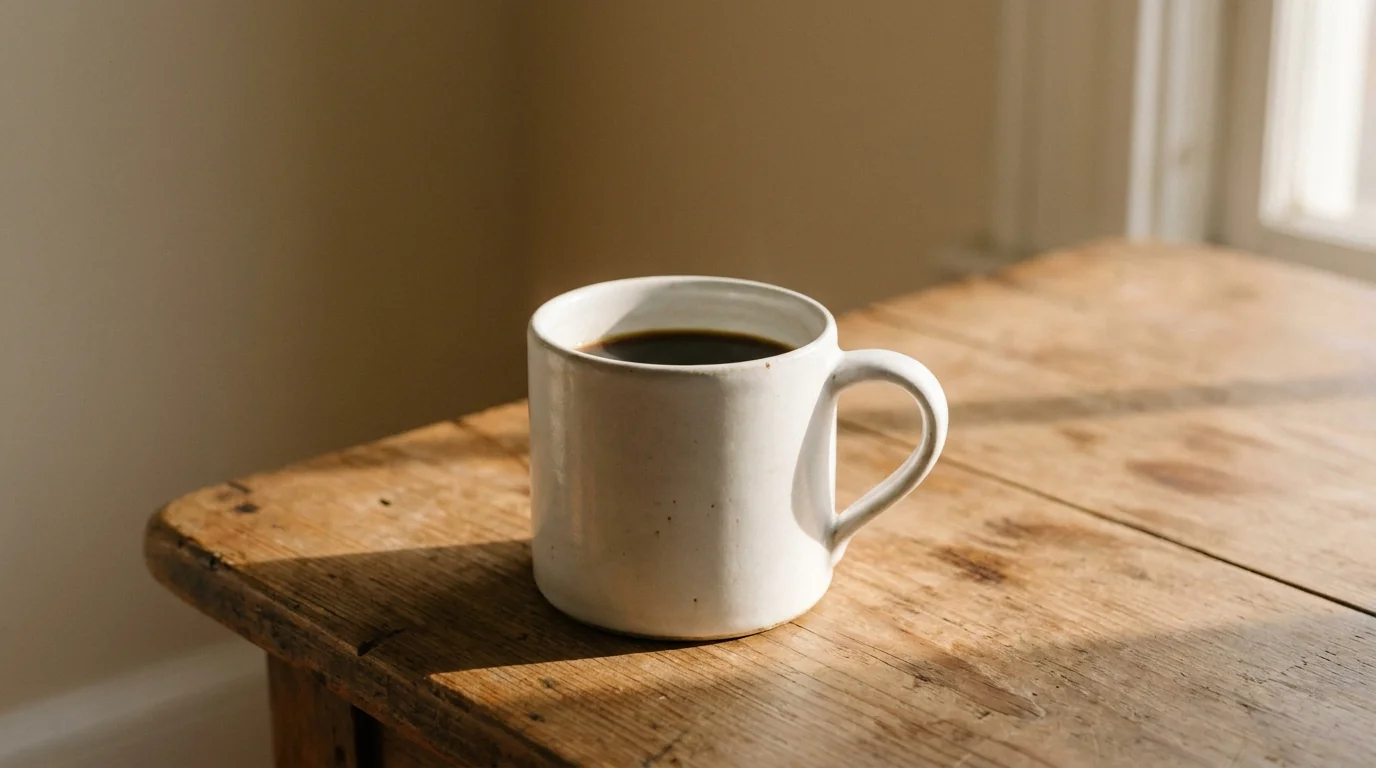
Decaf coffee is misunderstood in both directions — some drinkers think it's a completely different beverage from real coffee, others think it's a chemical-laden compromise you shouldn't drink at all. Both are wrong. Decaf is coffee with most of the caffeine removed by one of several well-established food-grade processes, and it retains most of what makes coffee interesting from both a flavour and health standpoint.
2–15 mg
typical caffeine content in an 8 oz cup of decaf coffee, per FDA guidance[3]
Not caffeine-free
decaffeination removes most but not all caffeine — precision analytical studies confirm typical residual levels[1]
Shared benefits
decaf appears in the same coffee-and-health research and shares much of the observed protective association pattern[5]
What "decaf" actually means
Decaf coffee is coffee where most of the caffeine has been removed from the green beans before roasting. The process happens at the raw-bean stage; the beans are then roasted and ground like regular coffee.
"Most" is doing a lot of work in that sentence. FDA and international standards define decaffeinated coffee as coffee where at least 97% of the caffeine has been removed. That still leaves a small amount — typically 2–15 mg per 8 oz cup, versus 80–100 mg for regular brewed[3].
A 2006 analytical toxicology study directly measured caffeine content across commercial decaf products and confirmed the range, noting that patients on caffeine-restricted diets should be aware that decaf is low-caffeine, not caffeine-free[1].
How decaffeination is done
Four decaffeination methods dominate commercial production. All work by dissolving caffeine out of green (unroasted) coffee beans, usually after they've been softened with water or steam.
1. Swiss Water Process (indirect water) Green beans are soaked in hot water; the water — now containing caffeine and coffee flavour compounds — is passed through activated charcoal that binds caffeine but not flavour molecules. The filtered water is used to soak new beans, which lose their caffeine (already saturated flavour in the water means only caffeine transfers out). Chemical-solvent-free.
2. CO2 Process (supercritical carbon dioxide) Beans are exposed to CO2 held at high pressure and temperature, where it behaves as a solvent that selectively dissolves caffeine. Widely used for large-batch commercial decaf. No residual solvent concerns.
3. Methylene Chloride (MC) Solvent-based; beans are washed with methylene chloride to dissolve caffeine, then thoroughly washed. FDA-permitted at residue levels below 10 ppm, well below the levels considered safe for food-grade use.
4. Ethyl Acetate Another solvent method, often marketed as "natural" because ethyl acetate occurs naturally in some fruits (though the industrial version is synthetic). Similar residue-safety profile to MC.
All four are FDA-approved for food-grade decaffeination. There is no documented public-health issue with modern decaf at the residue levels present in finished coffee.
What survives decaffeination
Caffeine leaves the beans; most other compounds mostly stay:
- Chlorogenic acids — coffee's dominant polyphenols. Slightly reduced in decaf but still present at meaningful levels.
- Melanoidins — brown pigments and antioxidants formed during roasting; unchanged by decaffeination since they form post-decaf.
- Trigonelline — bitter alkaloid; largely preserved.
- Cafestol and kahweol — coffee oils with their own health research; present in unfiltered brews (French press, espresso) regardless of decaffeination.
- Volatile aroma compounds — some are lost in the decaffeination process, which is why decaf can taste slightly flatter than regular. Careful processing minimises this.
Harvard's Nutrition Source summary notes that many of the observed health benefits of coffee — especially those related to type 2 diabetes and liver disease — appear in studies that included decaf drinkers, suggesting the non-caffeine compounds do meaningful work[6].
The health picture
Decaf coffee shares most of the favourable health profile of regular coffee. The 2017 BMJ umbrella review of coffee and health notes that many of the observed protective associations — including for cardiovascular outcomes, type 2 diabetes, and liver disease — persist in analyses that include decaf consumption[5].
Specifically documented for decaf:
- Type 2 diabetes — a 2009 Diabetes Care randomised study examining acute glucose metabolism in young men supports the hypothesis that non-caffeine compounds in coffee contribute to the observed diabetes-risk benefit[2].
- Cardiovascular outcomes — cohort studies typically find similar patterns for regular and decaf.
- Liver disease — inverse associations with liver enzyme elevations and fibrosis extend to decaf in most studies.
Where regular coffee has an edge (or where decaf differs):
- Alertness and performance — obviously requires caffeine, which decaf largely lacks.
- Parkinson's disease risk — the observed protective association for coffee here appears to be specifically caffeine-driven, not present with decaf.
- Athletic performance — same story: caffeine is the active ingredient.
When decaf is the right choice
Choose decaf if:
- You want the ritual and flavour of coffee without the caffeine
- You've hit the FDA/Health Canada 400 mg/day upper limit and want to keep drinking[3][4]
- You're pregnant or breastfeeding and cutting back (Health Canada recommends dropping to 300 mg/day)
- You have anxiety, sleep issues, or a medical condition that interacts with caffeine
- You want a warm cup in the evening without disrupting sleep
Regular coffee may be better if:
- You want a lift or performance benefit
- You don't have caffeine-related issues
- You enjoy the specific compounds caffeine provides
What the research says
The health-research consensus on decaf mirrors the consensus on regular coffee: neutral-to-favourable at moderate intake, with similar protective associations for diabetes, liver disease, and cardiovascular outcomes. The active compounds appear to be chlorogenic acids and other polyphenols, with caffeine playing a smaller role than lay assumptions suggest[5][2].
For most healthy adults, decaf is a safe and reasonable coffee substitute. Where it differs from regular coffee is in caffeine- specific outcomes: no meaningful alertness benefit, no acute blood-pressure or heart-rate response, no Parkinson's-risk association[6].
Common misconceptions
- "Decaf is caffeine-free." No. Typical decaf has 2–15 mg per 8 oz cup — enough to matter for very sensitive drinkers or people who react to trace caffeine[1].
- "Decaf is chemical-laden and bad for you." The solvents used are FDA-approved for food-grade use and leave residues below safety thresholds. Swiss Water and CO2 processes use no chemical solvents at all.
- "Decaf has no antioxidants." It does — most of coffee's antioxidant compounds survive decaffeination[6].
- "Decaf tastes bad." Modern decaf, especially freeze-dried and specialty single-origin decaf, is much better than it used to be. If you last tried decaf 20 years ago, retry.
Practical picks
- Water Process decaf — good for drinkers who want no solvent involvement at all; typically priced higher.
- CO2 process decaf — excellent flavour retention, common in supermarket premium decaf.
- Freeze-dried decaf instant — the drying method preserves more aroma; a decent decaf instant is a genuinely good no-caffeine cup at home.
- Half-caf — blends regular and decaf beans at roughly 1:1, giving you about half the caffeine of a regular cup with most of the flavour.
The honest summary
Decaf coffee is real coffee with the caffeine mostly (but not entirely) removed. Its health profile is similar to regular coffee's for the diabetes, liver, and cardiovascular outcomes — different for the caffeine-specific ones. Modern decaffeination processes are safe. If caffeine is a problem for you, decaf is a legitimate and evidence-supported way to keep drinking coffee.
Frequently asked questions
- How much caffeine is really in decaf coffee?
- Per FDA guidance and analytical chemistry studies, a typical 8 oz cup of decaf contains 2–15 mg of caffeine — compared with 80–100 mg for regular brewed coffee. Individual products vary; some 'super decaf' brands push below 5 mg, while some ordinary decafs can approach 20 mg per cup.
- Is decaf coffee bad for you?
- There is no strong evidence that decaf coffee is harmful. It shares much of the coffee-and-health research base with regular coffee, and most of the observed protective associations (type 2 diabetes, liver disease) appear in studies that included decaf drinkers.
- How is coffee decaffeinated?
- Modern commercial decaffeination uses one of four methods: Swiss Water Process (water and activated charcoal), CO2 process (supercritical carbon dioxide), methylene chloride, or ethyl acetate. All are considered food-safe at the residues that end up in the finished coffee, per FDA regulation.
- Does decaf coffee have antioxidants?
- Yes. Most of coffee's antioxidant compounds — chlorogenic acids, other polyphenols — survive decaffeination. Levels are slightly lower in decaf than in regular coffee but are still meaningful contributors to daily polyphenol intake.
References
Every factual claim in this article is drawn from the sources below. See the source library for how we grade evidence.
- [1]Caffeine Content of Decaffeinated CoffeeJournal of Analytical Toxicology · 2006 · Observational study · Tier 2 · Moderate
- [2]Decaffeinated Coffee and Glucose Metabolism in Young MenDiabetes Care · 2009 · Controlled trial · Tier 2 · Moderate
- [3]Spilling the Beans: How Much Caffeine Is Too Much?U.S. Food and Drug Administration · 2024 · Agency guidance · Tier 1 · Strong
- [4]Caffeine in foodsHealth Canada · 2022 · Agency guidance · Tier 1 · Strong
- [5]Coffee consumption and health: umbrella review of meta-analyses of multiple health outcomesBMJ · 2017 · Umbrella review · Tier 1 · Strong
- [6]Coffee — The Nutrition SourceHarvard T.H. Chan School of Public Health · Reference work · Tier 2 · Moderate
- [7]Instant coffeeWikipedia · Reference work · Tier 3 · Contextual
Related reading
- Instant & Decaf CoffeeIs Instant Coffee Bad for You?→
- Caffeine & HealthHow Much Caffeine Is in Coffee?→
- Caffeine & HealthCoffee and Diabetes: What Studies Show About Risk→
- Instant & Decaf CoffeeCO2 (Supercritical) Decaffeination→
- Instant & Decaf CoffeeEthyl Acetate ('Natural') Decaffeination→
- Instant & Decaf CoffeeHow to Make Instant Coffee Taste Better→