How to Make Instant Coffee Taste Better
By Coffee Studies Editorial·Published July 16, 2026·9 min read
Quick answer
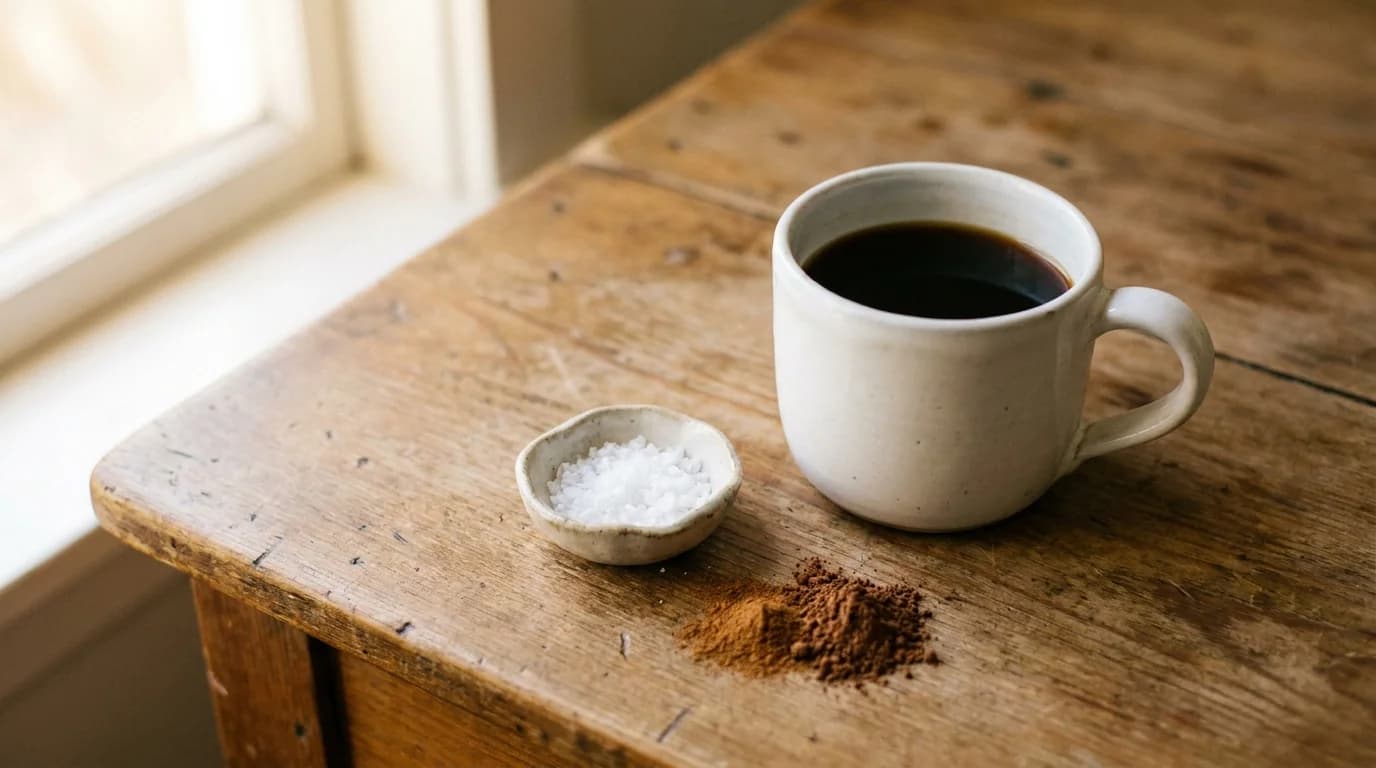
Instant coffee gets a bad rap, but a lot of the disappointment comes from bad technique. Most people follow the same routine — dump powder in a mug, pour boiling water, stir — and get a predictably flat cup. A handful of small adjustments can push even a mid-tier instant into territory that competes with a cheap drip coffee. This guide walks through the specific techniques that actually work, and why.
~1.8 g
standard instant coffee dose per 8 oz cup — using less water instead of more powder concentrates the flavor[3]
Freeze-dried
freeze-dried instant retains more of the volatile aroma compounds that give coffee its character than spray-dried[1]
A pinch
a few grains of salt selectively suppresses bitterness — a well-documented sensory effect, not a folk trick[4]
Start with better instant
The biggest quality gap in instant coffee isn't between brands at the same tier — it's between tiers. Before optimizing technique, upgrade the product.
Freeze-dried over spray-dried. Freeze drying preserves aroma compounds that spray drying destroys[1]. The difference is not subtle. If you're currently drinking a spray- dried supermarket instant, moving to a freeze-dried arabica (Mount Hagen, Nescafé Gold, Taster's Choice) is the biggest single upgrade available.
Arabica over robusta blends. Arabica has more complex aroma and less bitterness than robusta[7]. Most premium freeze-dried instants are 100% arabica or arabica-heavy; bulk supermarket brands are usually robusta or robusta-heavy blends.
Fresh jar. Instant loses aroma quickly once opened. Buy the smallest jar you'll finish in a month, and keep it tightly sealed in a cool, dry place. If your jar has been open for six months, that's probably contributing to the flatness of the cup.
See the best instant coffee brands for specific recommendations by tier.
Technique 1: Use less water (concentrate first)
The default package instructions — one teaspoon per 8 oz cup — produce a thin, over-diluted cup for most instant coffees. Try halving the water: use the same 1.8 g of powder in 4 oz of water instead of 8 oz. You get a concentrated cup with more perceived flavor.
If that's too strong to drink black, top up with hot water, hot milk, or a splash of cream after the coffee is fully dissolved. This "concentrate then dilute" approach also works better than adding all the water at once because it lets the granules dissolve fully before they're spread through a large volume of hot water[6].
Technique 2: Bloom the granules
Borrowed from pour-over technique, blooming instant coffee makes a noticeable difference — especially with freeze-dried granules.
- Add your instant coffee to the mug.
- Pour a tablespoon of hot water — just enough to fully wet the granules.
- Stir briefly. The granules will fizz slightly as trapped gases and aromas release.
- Wait 20-30 seconds.
- Add the rest of the hot water.
This gives the granules time to fully dissolve and lets some of the volatile aroma compounds[2] release into the headspace of the cup rather than being flash-boiled away by full-strength hot water.
Technique 3: A pinch of salt
This is the one that sounds crazy and works. Sodium ions selectively suppress bitter taste perception at the taste-bud level — a well-documented sensory phenomenon[4]. A few grains of salt (much less than you'd taste as salty) make instant coffee, which tends toward bitterness, noticeably smoother.
How to do it: add a tiny pinch of salt (fine sea salt is best) to the dry granules before pouring water. Stir well. Start with less salt than you think — you're not seasoning the cup, you're suppressing bitterness. Two or three grains per 8 oz cup is enough to notice.
This trick is used commercially: some coffee shops add a small amount of salt to their large-batch cold brew for the same reason.
Technique 4: Warm milk or condensed milk (Vietnamese-style)
Milk masks weaknesses in coffee. Warm whole milk adds body and sweetness. But sweetened condensed milk is transformative — it's the basis of Vietnamese-style coffee and it works beautifully with instant.
Vietnamese-style instant coffee:
- Use double the usual dose — 3-4 g of instant coffee in a small mug.
- Add 2-3 oz of hot water.
- Stir until fully dissolved.
- Add 1-2 tablespoons of sweetened condensed milk.
- Stir well.
The result is thick, sweet, and rich. It's not black coffee, but it's a genuinely enjoyable cup that hides any flaws in the underlying instant.
For iced Vietnamese-style, do the same and pour over ice.
Technique 5: Add spices
Small amounts of aromatic spices add complexity to a cup that otherwise tastes flat.
- Cinnamon — a scant pinch of ground cinnamon adds warmth and perceived sweetness. Common in Mexican-style coffee.
- Cardamom — a tiny amount transforms the aroma; standard in Middle Eastern coffee traditions. Use less than you think.
- Cocoa powder — unsweetened cocoa (about a quarter teaspoon per cup) adds bitterness in a pleasant way and adds body.
- Vanilla extract — a few drops of real vanilla extract in the finished cup adds sweetness without sugar.
- Ground ginger — small amounts add a warming, slightly spicy note. Not for everyone.
The general rule: add spices to the dry granules before pouring water, or blend them into the hot water first. This gives the aroma time to distribute through the cup.
Technique 6: Cold-water dissolve (for freeze-dried)
This is a specialty barista trick that works only with freeze-dried instant. The idea: dissolve the granules in a small amount of room-temperature water first, then top with hot water. The cold dissolve preserves aroma compounds that flash-boiling destroys[2].
Method:
- Add 1.8 g of freeze-dried instant to a mug.
- Add 1-2 tablespoons of room-temperature water.
- Stir until fully dissolved.
- Top with 7 oz of hot water.
The finished cup tastes noticeably brighter and more aromatic than the same instant dissolved directly in boiling water. Doesn't work with spray-dried because spray-dried granules are designed to dissolve in hot water and can clump in cold.
Technique 7: Don't oversweeten
If you find yourself adding two teaspoons of sugar to make instant coffee palatable, the problem is usually the coffee (too bitter, stale) or the technique (too much water, poor dissolution). Sugar masks coffee flavor as effectively as it masks bitterness.
Try instead: better instant, plus a pinch of salt, plus a splash of cream or milk. If you still want sweetness, use less sugar than you think — half a teaspoon in a cup is enough for most palates once the bitterness is under control.
If you're using flavored 3-in-1 instant packets, they're already sweetened at a very high level — around 8-12 g of added sugar per serving. That's a formulation choice you can't undo, but plain instant plus a modest amount of your own sweetener gives you far more control.
Technique 8: Actually stir it properly
Instant coffee needs mechanical dissolution. Poorly-dissolved granules produce a chalky texture and uneven flavor. The fix:
- Stir vigorously for 10-15 seconds. Not the two-second half- hearted stir most people give it.
- Use a small whisk if you have one, or a milk frother stick. Aerating the water while stirring helps dissolve the granules faster and adds a small amount of foam that reads as premium.
- Look at the cup. If you see undissolved specks, keep stirring.
Technique 9: Water temperature matters
Boiling water (100°C, 212°F) is actually too hot for most coffee brewing — it extracts more of the harsher flavor compounds[8]. Better range: 88-93°C (190-200°F).
Practical approach: bring water to a boil, then let it sit for 30 seconds before pouring. Or use a variable-temperature kettle if you have one and set it to 92°C.
Technique 10: Better water
Coffee is 98%+ water. Bad water — heavily chlorinated tap water, water with strong mineral off-flavors — makes bad coffee, and it shows more with instant than with brewed because there's less coffee to hide behind. Use filtered water if your tap has issues.
Technique 11: Try single-serve packets
Single-serve packets (Waka, Alpine Start, Voila, Sudden) protect each dose from air and moisture in a way jars can't. Aroma is preserved until you tear the packet. If you find that jar instant loses appeal after the first week, the packet format solves that.
Cost per serving is higher — around $1-2 vs $0.15-0.30 for jarred — but for people who drink one cup a day and want each one to be good, the math often works.
Technique 12: Serve it in a nice cup
This one sounds trivial and isn't. Coffee served in a warmed ceramic mug tastes better than the same coffee in a paper cup or a cold mug — the warming keeps volatile aromas in the headspace, and ceramic doesn't add off-flavors the way some paper cups can.
Rinse your mug with hot water before making coffee. Small change, noticeable difference.
Putting it together: a better cup, step by step
Here's the sequence combined:
- Rinse mug with hot water; discard.
- Add 1.8 g of freeze-dried arabica instant.
- Add a scant pinch of salt.
- Add 1-2 tablespoons of hot water (~92°C). Stir until dissolved.
- Wait 20 seconds.
- Add 5-6 oz more hot water. Stir vigorously.
- Optionally top with a splash of warm milk or cream.
- Drink.
Total prep time: about a minute. The result is a distinctly better cup than the default technique produces.
What doesn't work
Some commonly-recommended tricks that mostly don't help:
- Adding oil (MCT, coconut) to instant coffee. Adds fat and calories; doesn't improve flavor of the coffee itself. If you like bulletproof-style coffee, that's a different drink.
- Using milk instead of water to reconstitute. Milk proteins interfere with proper dissolution of the granules, so you get clumping. Better to make the coffee with water first, then add milk.
- Microwaving instant coffee. Not necessary if your water was the right temperature to start with. Overheating drives off aroma.
- Adding butter, ghee, or coconut oil. Same as MCT — different drink, not a flavor upgrade.
- Sugar and lots of it. Masks coffee flavor rather than improving it.
When even the best techniques won't help
Some instant coffee is just bad. If you're working with a spray-dried robusta from a jar that's been open six months, no technique will make it good. In that case: buy a better instant. See the best instant coffee brands for options at every price point, and how instant coffee is made for context on why some instants are inherently better than others.
The honest summary
Instant coffee responds well to a small amount of care. Better product (freeze-dried arabica) plus better technique (concentrate, bloom, pinch of salt, stir well) can produce a cup that pleasantly surprises people who wrote off instant a decade ago. None of these techniques are complicated; they just require thinking about the cup as brewing rather than dumping. If you drink instant coffee daily, the cumulative payoff of taking 60 seconds instead of 15 is significant — better morning coffee, every day, for the rest of the jar.
Frequently asked questions
- What is the single best thing I can do to make instant coffee taste better?
- Switch from spray-dried to freeze-dried, and from robusta blends to arabica. Freeze drying preserves aroma compounds that spray drying destroys, and arabica has a more nuanced flavor profile than robusta. Mount Hagen and Nescafé Gold are common starting points; specialty single-serve packets from Waka, Alpine Start, or Onyx are the next step up.
- Does salt really improve instant coffee?
- Yes, and it's not folklore. Sodium ions selectively suppress bitter taste perception, which is why a tiny pinch of salt (much less than you'd taste) can make instant coffee — which tends toward bitterness — noticeably smoother. A few grains per cup is plenty.
- Why do people bloom instant coffee?
- Blooming — adding a small amount of hot water to the granules first, stirring, and waiting 30 seconds before adding the rest — helps the granules fully dissolve and releases trapped aroma compounds. It's the same principle as blooming ground coffee before pour-over. Makes a noticeable difference with freeze-dried granules.
- Is cold water dissolve better for instant coffee?
- For freeze-dried instant, cold water dissolve works surprisingly well and preserves more volatile aroma compounds than boiling water. You dissolve the granules in a small amount of room-temperature water first, then top with hot water. Not necessary for spray-dried, which is designed for hot dissolution.
- Can I make Vietnamese-style coffee with instant?
- Yes, and it works better than you'd expect. Use double the usual dose of instant (about 3–4 grams) in a small amount of hot water to make a concentrate, then add 1–2 tablespoons of sweetened condensed milk. Stir well. The sweetness and rich texture of condensed milk masks most of the deficiencies of average instant.
References
Every factual claim in this article is drawn from the sources below. See the source library for how we grade evidence.
- [1]Spray-freeze-drying as emerging and substantial quality enhancement technique in food industryPMC / NIH · 2024 · Review · Tier 2 · Moderate
- [2]Coffee volatile compounds and roast markersPMC / NIH · 2016 · Review · Tier 2 · Moderate
- [3]Instant coffeeWikipedia · Reference work · Tier 3 · Contextual
- [4]Sodium ions selectively suppress bitter tasteNature (Breslin & Beauchamp) · 1997 · Controlled trial · Tier 2 · Moderate
- [5]FoodData CentralU.S. Department of Agriculture · Official dataset · Tier 1 · Strong
- [6]Coffee extraction kinetics in a well mixed systemJournal of Mathematics in Industry · 2016 · Review · Tier 2 · Moderate
- [7]CoffeeEncyclopaedia Britannica · Reference work · Tier 3 · Contextual
- [8]Brewing FundamentalsCoffee Science Foundation · Reference work · Tier 2 · Moderate
Related reading
- Instant & Decaf CoffeeHow Is Instant Coffee Made? Freeze-Dry vs Spray-Dry→
- Instant & Decaf CoffeeThe Best Instant Coffee Brands→
- Instant & Decaf CoffeeIs Instant Coffee Bad for You?→
- Instant & Decaf CoffeeFreeze-Dried vs Spray-Dried Coffee→
- Instant & Decaf CoffeeThe History of Nescafé: How Nestlé Invented Instant Coffee→
- Instant & Decaf CoffeeEthyl Acetate ('Natural') Decaffeination→