Swiss Water Decaf: How Chemical-Free Decaf Works
By Coffee Studies Editorial·Published July 15, 2026·9 min read
Quick answer
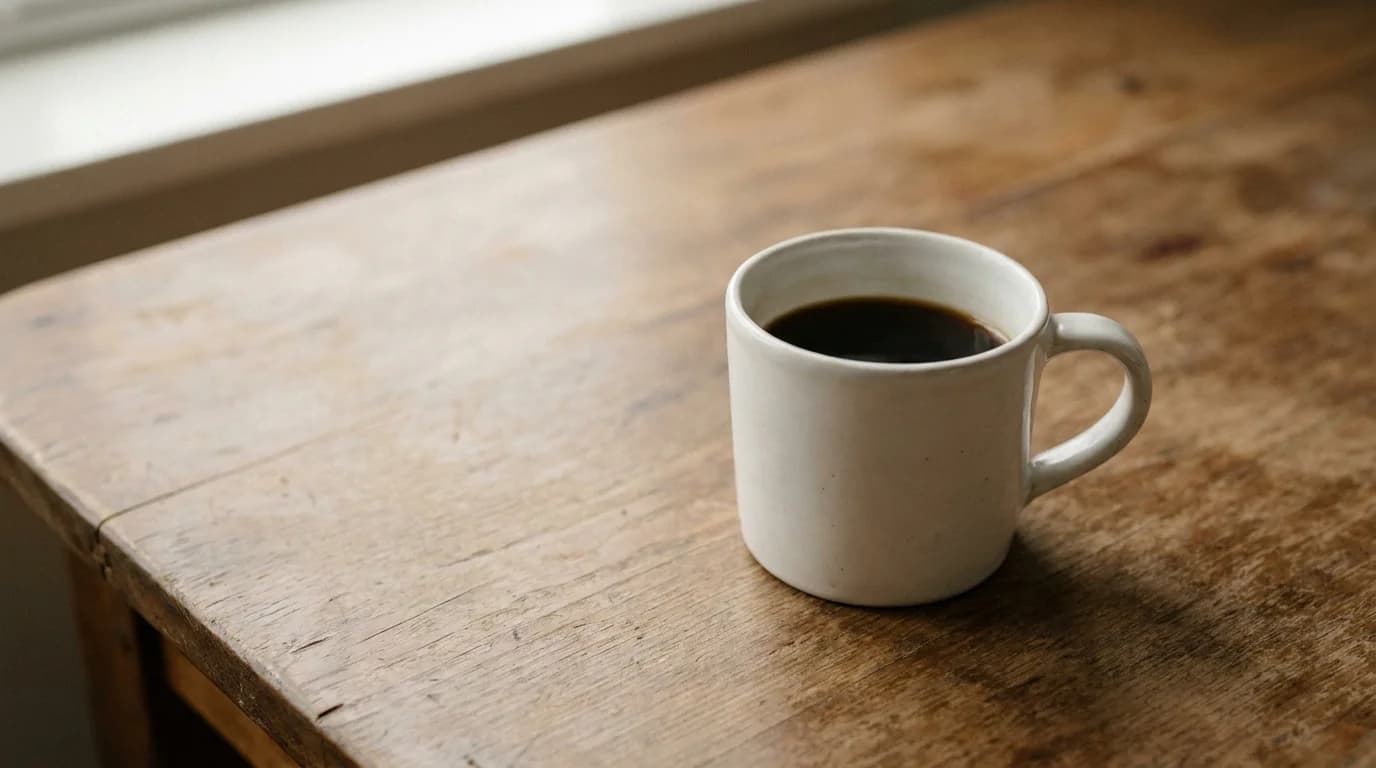
The Swiss Water Process solves an old problem in coffee: how to remove caffeine without also removing what makes coffee taste like coffee. The problem is fundamentally chemical — caffeine is one of many hundreds of compounds in coffee, and any process that pulls caffeine out tends to pull other flavour molecules out too. Swiss Water's clever solution is to pre-saturate the solvent (water) with the coffee flavour compounds so it selectively targets caffeine while leaving flavour alone. It's the specialty coffee industry's preferred decaffeination method and the reason "Swiss Water" appears on so many specialty decaf labels.
99.9% removal
the caffeine removal standard achieved by the Swiss Water Process — the maximum allowed for 'decaffeinated' labelling[2]
Chemical-free
uses only water and activated carbon — no solvents, dichloromethane, or ethyl acetate[6]
2-5 mg caffeine/cup
typical residual caffeine in a cup of Swiss Water decaf — vs ~95 mg in a cup of regular drip coffee[1]
The problem Swiss Water solves
Coffee contains hundreds of flavour-relevant compounds — chlorogenic acids, sugars, aromatic esters, melanoidins, lipids, and many others. Caffeine is just one of them, typically about 1-2% of the dry bean weight.
Any solvent that pulls caffeine out of green coffee beans tends to pull other water-soluble compounds out too. This is the fundamental chemistry problem of decaffeination: caffeine isn't uniquely soluble in a way that makes it easy to selectively extract.
Traditional decaffeination methods handle this by using specific solvents that preferentially bind caffeine — but they often extract other flavour compounds too, and the process either damages coffee flavour or leaves solvent residues that affect the taste.
The Swiss Water insight: use water as the solvent, but pre-saturate the water with coffee flavour compounds first. Because the water is already saturated with flavour, it doesn't pull flavour compounds out of the beans (it's already at equilibrium). But it can still pull caffeine out — because the water contains no caffeine.
The specific process
The Swiss Water Process, as commercialised by Swiss Water Decaffeinated Coffee Inc. in Vancouver, Canada:
Step 1: Green Coffee Extract preparation.
- A batch of green coffee is soaked in water to extract its water-soluble compounds.
- The resulting solution — Green Coffee Extract (GCE) — contains caffeine, chlorogenic acids, sugars, aromatic compounds, and other water-soluble molecules.
- This GCE is passed through activated carbon filters that trap caffeine molecules but let smaller flavour compounds pass through.
- Result: caffeine-free GCE, still saturated with all the other water-soluble coffee compounds.
Step 2: Decaffeination.
- Fresh green coffee beans (target batch) are soaked in the caffeine-free GCE.
- Concentration gradient: bean caffeine is higher than GCE caffeine (zero); flavour compound concentrations are at equilibrium between beans and GCE.
- Result: caffeine diffuses out of beans into GCE; flavour compounds don't move.
- Process continues until beans are 99.9% decaffeinated (typically 8-10 hours).
Step 3: GCE regeneration.
- Now-caffeinated GCE passes through activated carbon filters again — caffeine trapped, other compounds pass through.
- Result: caffeine-free GCE, ready to decaffeinate the next batch.
Step 4: Bean drying.
- Decaffeinated beans are dried back to normal moisture content (~11-12%).
- Beans are now green, water-processed, 99.9% caffeine-free, and ready for roasting.
What makes it work: the pre-saturation of GCE with flavour compounds means the water isn't pulling those compounds out of the beans during decaffeination. Only caffeine moves. The activated carbon filters then selectively trap caffeine specifically — carbon filters are much better at trapping large aromatic caffeine molecules than at trapping smaller flavour molecules like sugars[2].
History and geography
Despite the name, the modern Swiss Water Process is Canadian, not Swiss:
- 1930s: Swiss researchers develop the original water- based decaffeination method.
- 1979: Swiss Water Decaffeinated Coffee Inc. founded in Burnaby, British Columbia, Canada.
- 1988: Commercial-scale Swiss Water processing plant operational in Vancouver.
- Today: The Swiss Water plant in Burnaby is the primary commercial Swiss Water processing facility in the world. Green coffee is shipped there from origins around the world, decaffeinated, and shipped back to roasters.
- Mountain Water Process is a related water-based decaffeination method operating in Mexico (Descamex facility in Veracruz), using similar principles.
The "Swiss Water" trademark is held by the Vancouver company; other water-based decaffeination methods use different naming.
Comparison to other decaffeination methods
Direct solvent methods (dichloromethane, ethyl acetate):
- Green beans are steamed to open pores.
- Beans are soaked in the solvent, which selectively binds caffeine.
- Solvent is drained and beans are steamed again to remove any residual solvent.
- Beans dried and finished.
- Dichloromethane (methylene chloride) was historically the dominant industrial solvent — very effective, but the compound is a suspected human carcinogen at high exposure. Trace residues in finished coffee are far below toxicity thresholds and FDA/EFSA consider it safe, but consumers often prefer to avoid it on principle. EU has moved to phase it out.
- Ethyl acetate (natural ester, sometimes called "sugar cane decaf" because it can be produced from sugar cane fermentation) has replaced dichloromethane in many applications. Also considered safe by regulators, and many coffee drinkers prefer it as a "natural" solvent alternative.
Indirect solvent methods (Swiss Water is the leading example):
- No direct solvent contact with beans.
- Water is the medium; activated carbon does the caffeine removal.
- No residual chemicals.
Supercritical CO₂ method:
- CO₂ is pressurised to a supercritical state (behaves as both liquid and gas).
- Supercritical CO₂ is passed through green beans; it selectively extracts caffeine.
- CO₂ is depressurised and caffeine precipitates out.
- CO₂ is recovered and reused.
- Chemical-free (only CO₂, which is naturally in coffee/water/air).
- Excellent flavour preservation.
- Expensive equipment; used mostly for higher-end decaf.
- Common brand: "CO₂-processed" or "Sparkling Water Method."
Method comparison for consumers:
| Method | Chemical-free? | Flavour preservation | Cost |
|---|---|---|---|
| Swiss Water | Yes | Excellent | Higher |
| Supercritical CO₂ | Yes | Excellent | Higher |
| Ethyl acetate | Solvent (natural-origin) | Good | Medium |
| Dichloromethane | Solvent (synthetic) | Good | Lower |
Specialty coffee decaf is almost always Swiss Water or supercritical CO₂. Commercial mass-market decaf is often solvent-based for cost reasons.
What Swiss Water decaf tastes like
Swiss Water decaf preserves most of the coffee's flavour character — but there's typically some difference from the same beans in caffeinated form:
What's preserved:
- Origin character (bright acidity, floral notes, chocolate sweetness, etc.).
- Body and mouthfeel.
- Most aromatic compounds.
- Most sugars and acids.
What can be affected:
- Some subtle aromatic complexity may be reduced.
- Slight loss of body in some coffees.
- Occasionally a subtle "washed-out" quality if processing wasn't optimally executed.
In general, a high-quality Swiss Water decaf from good specialty beans tastes recognisably like the same coffee would caffeinated — with 90-95% of the flavour intact. For casual drinkers, the difference is often imperceptible.
Which brands actually use it
The commonest version of this question is about a specific bag on a specific shelf, so here are the ones people ask about most.
| Brand | Process | Note |
|---|---|---|
| Folgers | Not Swiss Water. Ethyl acetate, direct method | The most searched version of this question, and the answer is no |
| Peet's (House Blend Decaf) | Swiss Water | Stated by the roaster |
| Starbucks (Decaf Pike Place) | Not reliably Swiss Water. Historically methylene chloride; lots vary | Treat an unlabelled Starbucks decaf as solvent decaf |
| Kicking Horse | Swiss Water | Stated on the bag |
Two cautions that matter more than the table.
A roaster can change decaffeinator between lots, and most do not announce it. A brand that used Swiss Water last year is not thereby committed to it, which is why the label on the bag in your hand beats any list, this one included.
Silence is not Swiss Water. Swiss Water is a trademark a roaster pays to use, so a bag that has it says so, usually prominently. Decaf with no process named on the pack is far more likely to be solvent decaf than an unlabelled premium one — nobody buys the licence and then hides it.
Reading Swiss Water labels
Coffee labelled "Swiss Water Decaf" or "Swiss Water Process" has been specifically processed by the trademarked Swiss Water method. Related labels:
- "Water Process" or "Water Method Decaf" — generally a Swiss Water or similar water-based process, though not necessarily the specific Swiss Water branded method.
- "Mountain Water Process" — the Mexican water-based process (Descamex), similar principle, different facility.
- "Chemical-Free Decaf" — usually Swiss Water or CO₂.
- "CO₂ Decaf" or "Sparkling Water Process" — the supercritical CO₂ method.
- "Natural Decaf" — vague marketing term; often ethyl acetate ("natural" because ethyl acetate can be derived from sugar cane).
- "European Process" — historically indicates direct solvent (typically ethyl acetate or dichloromethane).
- No processing method specified — likely a solvent- based method (mass-market decaf).
Every bag below states the process on its own label, which is the only evidence worth accepting for the claim. The listing title and price shown on each are pulled from the storefront rather than retyped here, so what the label says and what we say cannot drift apart.
Bags whose labels say Swiss Water
 Swiss Water decaf, whole beanKicking Horse Coffee, Decaf, Swiss Water Process, Dark Roast, Whole Bean, 10 Oz - Certified Organic, Fairtrade, Kosher CoffeeA Canadian roaster whose decaf line has used the Swiss Water process long enough to be the default recommendation in the category. Dark roast, which matters more than usual in decaf: the process strips some of the compounds that carry aroma, and a darker roast puts body back.amazon.com $14.99 USDamazon.ca $25.99 CADPrice and availability as of View on Amazon
 Swiss Water decaf, organic, groundLifeboost Decaf Ground Coffee, Swiss Water Process Low Acid Organic, 12oz | Fair Trade, Non-GMO, Single Origin, Third Party Tested for Mycotoxins, Mold & Pesticides, Stomach FriendlySold on both storefronts, which is rarer in decaf than it sounds and is why it is here. Note that the label also carries a low-acid claim: that is the roaster's wording, not a measurement we have checked, and roast level moves perceived acidity more than sourcing usually does.amazon.com $28.99 USDamazon.ca $32.95 CADPrice and availability as of View on Amazon
 Swiss Water decaf, groundVerena Street Sunday Drive, Swiss Water Process Decaf Ground, 11oz | Medium Roast Swiss Water Process Decaffeinated Coffee, Rainforest Alliance Certified Arabica CoffeeGround rather than whole bean, which is the honest choice if you do not own a grinder yet. Decaf beans are more brittle than caffeinated ones and grind slightly finer at the same setting, so a pre-ground bag removes a variable while you work out the rest.amazon.com $12.00 USDnot sold on amazon.caPrice and availability as of View on Amazon
Product prices and availability are accurate as of the date/time indicated and are subject to change. Any price and availability information displayed on Amazon at the time of purchase will apply to the purchase of this product. Certain content that appears on this site comes from Amazon. This content is provided ‘as is’ and is subject to change or removal at any time.
Cost premium
Swiss Water and CO₂ decaf coffees typically cost more than solvent-processed decaf:
- Solvent decaf — bulk commodity pricing, added to most mass-market decaf.
- Swiss Water decaf — roughly $2-5/lb premium at the wholesale green level; often $18-30/lb retail for specialty roasted.
- CO₂ decaf — similar or slightly higher premium than Swiss Water.
For most specialty coffee consumers, the premium is worth it — the flavour preservation is meaningfully better and there's no chemical processing to think about.
Several Swiss Water bags also carry a low-acid claim on the label. The two properties are unrelated, and what does and does not change acidity is covered in low acid coffee.
Common misconceptions
- "Swiss Water is Swiss." Modern Swiss Water Process is Canadian, not Swiss. The original 1930s water-based research was Swiss; commercial-scale Swiss Water is a Vancouver company.
- "Decaf is 100% caffeine-free." No decaf is literally 100% caffeine-free. Swiss Water achieves 99.9% removal — typically 2-5 mg caffeine per cup vs 95 mg in regular coffee. Trace amounts remain.
- "Solvent decaf is dangerous." Regulatory agencies consider approved solvent methods safe when used correctly. Consumer preference for chemical-free processing is legitimate but not driven by proven safety issues at typical exposure levels.
- "Swiss Water tastes exactly like regular coffee." Very close, but not identical. Most tasters can identify a difference if directly comparing the same beans caffeinated vs Swiss Water decaf. The difference is small but usually detectable.
Practical guidance
For everyday decaf drinking:
- Look for "Swiss Water" or "CO₂ processed" labels for specialty decaf.
- Fresh roasting matters as much as processing method — a well-roasted specialty decaf beats a Swiss Water processed but stale decaf.
For chemical-sensitivity concerns:
- Swiss Water is the definitive chemical-free choice.
- CO₂ processed is also chemical-free (only CO₂ involved).
- If a package doesn't specify method, assume solvent- based.
For coffee taste preservation:
- Swiss Water and CO₂ are the best choices.
- Fresh single-origin decaf specifically processed by Swiss Water or CO₂ can be excellent coffee.
For pregnancy or caffeine sensitivity:
- Swiss Water is a good choice for maximum caffeine removal.
- Note the 2-5 mg residual caffeine — usually inconsequential, but worth knowing.
- See Coffee and Pregnancy for specific pregnancy caffeine guidance[4].
The honest summary
The Swiss Water Process is a chemical-free coffee decaffeination method that removes 99.9% of caffeine from green coffee beans using only water and activated carbon filtration. It solves the fundamental challenge of decaffeination — selectively removing caffeine without removing flavour — by pre-saturating water with coffee flavour compounds so it targets only caffeine. Swiss Water is the preferred decaffeination method for specialty coffee and is available at premium prices vs solvent-processed decaf. Supercritical CO₂ is a similar chemical-free alternative. Both preserve most of the coffee's flavour character, making high-quality decaf that tastes recognisably like the caffeinated version of the same beans.
Frequently asked questions
- What is the Swiss Water Process?
- Swiss Water is a chemical-free coffee decaffeination method developed in Switzerland in the 1930s and commercialised in Canada from the 1980s. It removes caffeine from green coffee beans using only water and activated carbon — no solvents, no chemicals. The process achieves 99.9% caffeine removal while preserving most of the coffee's flavour compounds, making it the preferred decaffeination method for specialty coffee.
- How does Swiss Water decaffeination actually work?
- Green coffee beans are soaked in Green Coffee Extract (GCE) — water that's already saturated with the water-soluble flavour compounds of coffee but has had all caffeine removed via activated carbon filtration. The bean-caffeine concentration is higher than the GCE-caffeine concentration (zero), so caffeine diffuses out of the beans into the water. Flavour compounds stay in the beans because they're already at equilibrium with the GCE. The now-caffeinated GCE passes through activated carbon filters that trap caffeine molecules, refreshing the GCE to zero-caffeine, ready for the next batch.
- Is Swiss Water safer than other decaf methods?
- It's chemical-free, which is its main appeal. Other decaffeination methods use solvents — historically dichloromethane (methylene chloride) or ethyl acetate — that are removed from the beans before roasting but leave people uncomfortable about residues. Swiss Water uses only water, so there's no chemical exposure question. Regulatory agencies (FDA, EFSA) consider all approved methods safe when used correctly, but Swiss Water avoids the debate entirely by using no chemicals.
- Does Swiss Water decaf taste better than solvent decaf?
- Specialty coffee generally considers Swiss Water to be superior in flavour preservation to older solvent-based methods. Modern CO2 (supercritical carbon dioxide) decaffeination is also excellent and used for high-end decaf. Older dichloromethane and ethyl acetate methods sometimes leave flavour residues or over-extract flavour compounds. Swiss Water and CO2 are the two decaf methods you'll see mentioned on specialty coffee labels.
- Is Swiss Water 100% caffeine-free?
- Swiss Water achieves 99.9% caffeine removal, which is the highest level allowed to be marketed as decaffeinated in most jurisdictions. A cup of Swiss Water decaf typically contains 2-5 mg of caffeine, compared to ~95 mg in regular coffee — essentially trace amounts, but not literally zero. Anyone with extreme caffeine sensitivity should be aware that no decaf is truly 100% caffeine-free.
References
Every factual claim in this article is drawn from the sources below. See the source library for how we grade evidence.
- [1]Caffeine Content of Decaffeinated CoffeeJournal of Analytical Toxicology · 2006 · Observational study · Tier 2 · Moderate
- [2]Brewing FundamentalsCoffee Science Foundation · Reference work · Tier 2 · Moderate
- [3]Spilling the Beans: How Much Caffeine Is Too Much?U.S. Food and Drug Administration · 2024 · Agency guidance · Tier 1 · Strong
- [4]Caffeine in foodsHealth Canada · 2022 · Agency guidance · Tier 1 · Strong
- [5]Instant coffee: a probabilistic risk assessment of metals, acrylamide and ochratoxin APMC / NIH · 2024 · Observational study · Tier 2 · Moderate
- [6]CoffeeEncyclopaedia Britannica · Reference work · Tier 3 · Contextual
Related reading
- Instant & Decaf CoffeeDecaf Coffee: Benefits and Risks→
- Instant & Decaf CoffeeIs Instant Coffee Bad for You?→
- Instant & Decaf CoffeeFreeze-Dried vs Spray-Dried Coffee→
- Instant & Decaf CoffeeThe History of Nescafé: How Nestlé Invented Instant Coffee→
- Instant & Decaf CoffeeCO2 (Supercritical) Decaffeination→
- Instant & Decaf CoffeeBest Decaf Coffee Brands: Ranked by Method and Taste→