Coffee Creamer: How Long Good After Opening
By Coffee Studies Editorial·Published November 27, 2026·6 min read
Quick answer
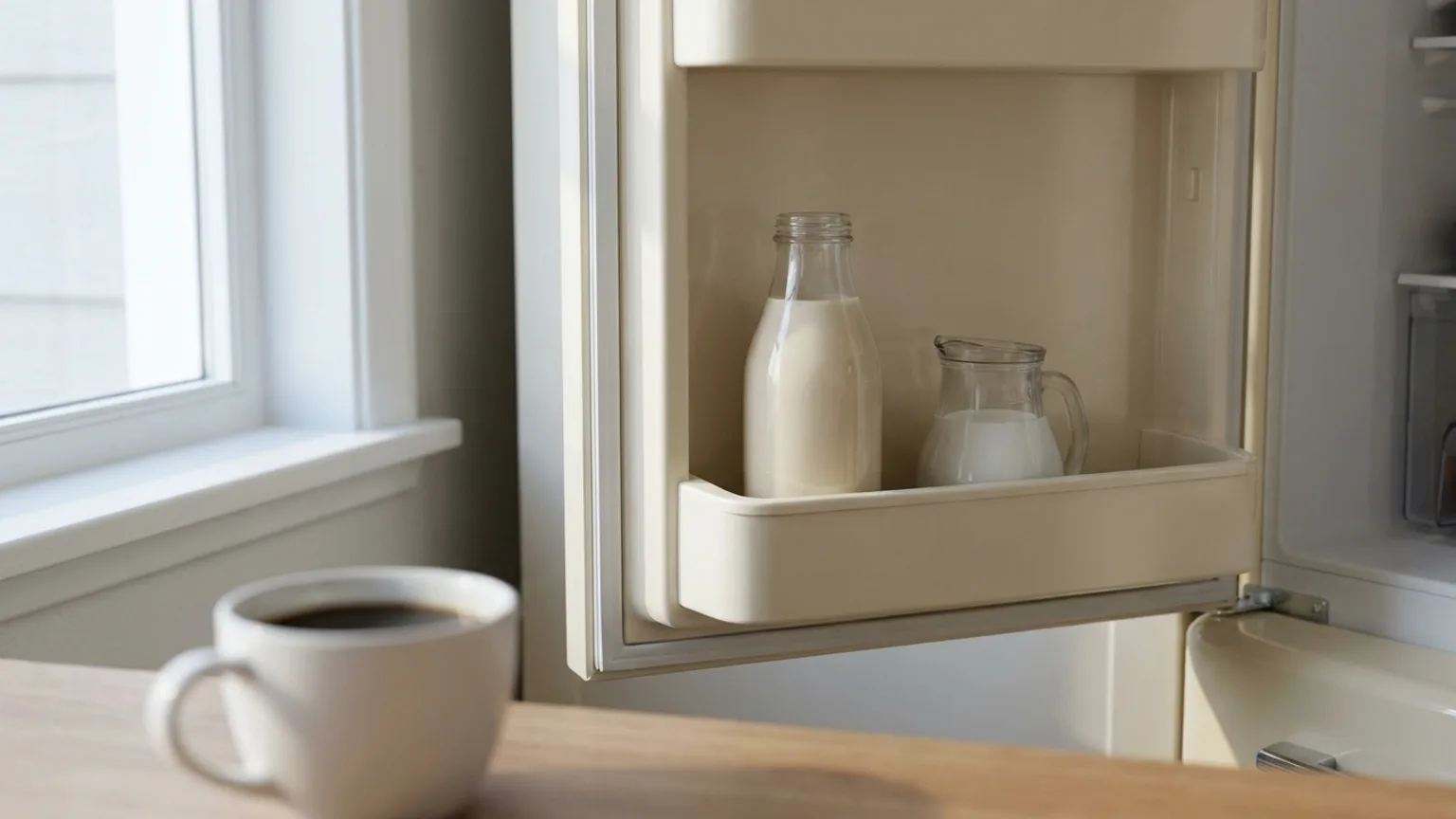
Two weeks is the number to remember. Both of the big American creamer brands give an opened bottle 14 days in the fridge. [1] Powder lasts much longer, and creamer left on the counter much shorter. The table below puts every figure beside the source that gives it, because the day counts online disagree with each other.
How long is coffee creamer good for after opening?
Liquid creamer from the fridge aisle is good for about 14 days once you open it. Coffee mate puts a cap on it. [2] Use it within 14 days of opening "or before the use-by date, whichever comes first". International Delight says the same 14 days, as long as the bottle goes back in the fridge after each use. [1]
14 days
for an opened bottle of liquid creamer kept in the fridge, by Coffee mate and International Delight[2]
2 to 3 months
for an opened tub of powdered creamer in a cool, dry cupboard[3]
2 hours
the longest any perishable food should sit out of the fridge; 1 hour above 90°F[5]
So the clock starts when you break the seal, not when you buy it. A bottle you opened on a Sunday is done the Sunday after next. Mark the day on the cap with a pen, and the guesswork goes away. Coffee itself runs on a slower clock; how long coffee lasts covers beans and grounds.
How long each kind of creamer keeps, opened and unopened
The figures below come from USDA's FoodKeeper data, North Dakota State University's storage guide and the two brands' own FAQs. [3] We read each one in November 2026. Where a source gives no number, the cell says so.
| Creamer | Unopened | Opened |
|---|---|---|
| Liquid, fridge aisle | Until the date; about 3 weeks in the fridge from purchase | 14 days in the fridge, or the date if sooner |
| Liquid, "Refrigerate After Opening" | Cool, dry cupboard | Fridge, then the same 14 days |
| Single-serve cups | No fridge needed while sealed | Fridge any leftover, use soon |
| Powdered | Up to 2 years | 2 to 3 months, cool and dry |
| Half and half | 3 to 4 days in the fridge from purchase | No separate figure given |
| Light cream | About 1 week in the fridge from purchase | No separate figure given |
The liquid rows come from FoodKeeper and both brands' FAQs, the shelf-stable bottle from Coffee mate and the cups from International Delight. Powder draws on FoodKeeper, NDSU and Coffee mate, which gives sealed tubs up to 24 months; the two creams are FoodKeeper figures.
FoodKeeper counts liquid creamer from the day you buy it, not the day you open it. [3] That is why its three weeks and the brands' 14 days are not a contradiction. They measure from different starting points.
NDSU's guide agrees on powder: 2 years sealed, 2 to 3 months once open. [4]
Does coffee creamer need to be refrigerated?
If you bought it refrigerated, keep it refrigerated. Coffee mate is firm on this point. [2] Refrigerated liquid creamer "must be refrigerated at all times, before and after opening".
Some liquid bottles sit on a dry shelf in the store instead. Those carry the words "Refrigerate After Opening" on the label. They can wait in a cool cupboard until you open them, then they go in the fridge. [2]
Powder never needs the fridge. Keep it in a cool, dry spot with the lid on tight. [2] The same cupboard logic applies to beans, as our guide to storing coffee beans explains.
Do creamer cups and singles go bad?
They do, but only gradually. The little cups in a diner bowl are sealed and made to sit at room temperature. International Delight says its unopened singles do not need the fridge. [1]
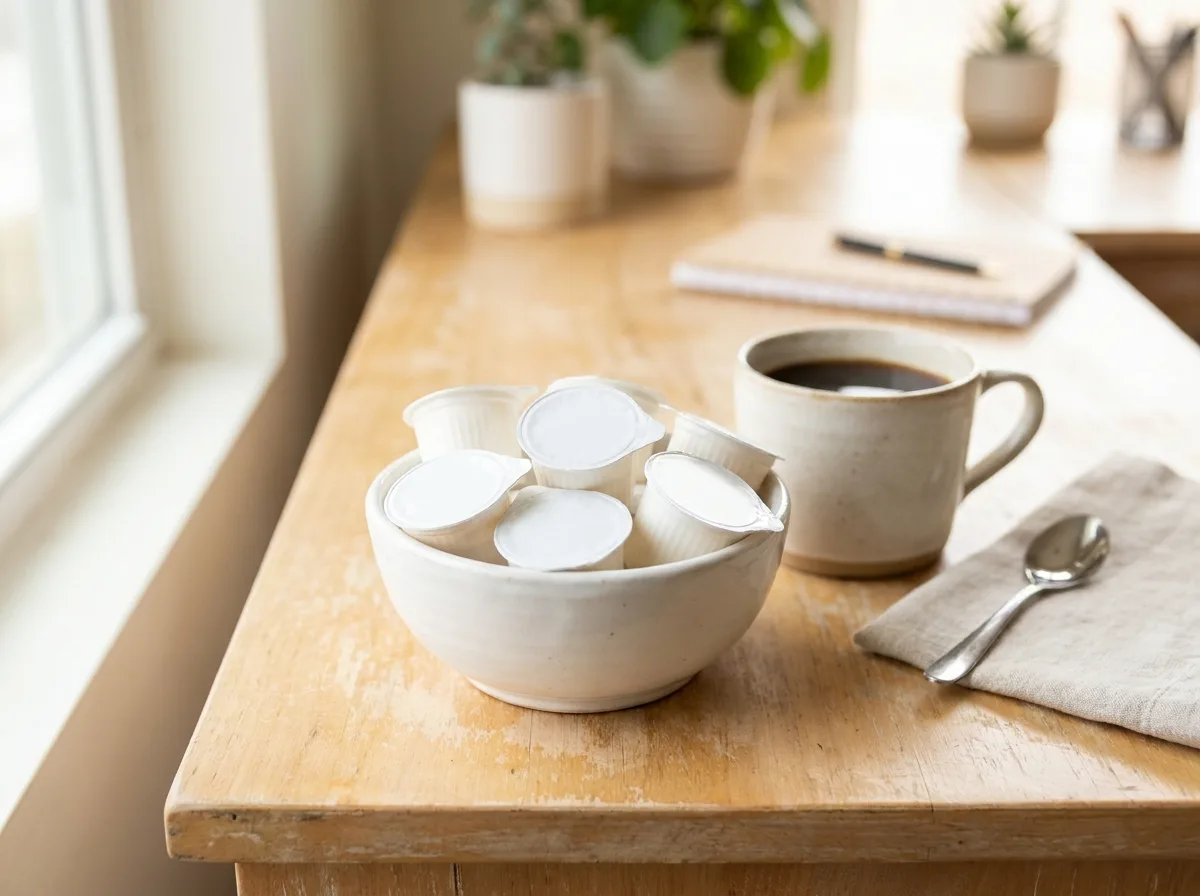
Each cup still has a date, so check it before you peel. Once a cup is open, it is just liquid creamer. The company asks you to refrigerate whatever is left. [1] In practice, that means pour the whole cup or toss the rest.
How long can coffee creamer sit out?
Two hours, at the absolute maximum. The USDA's food safety service sets that limit for any food that needs the fridge, and creamer counts. [5] On a hot day it shrinks: above 90°F, the limit is 1 hour.
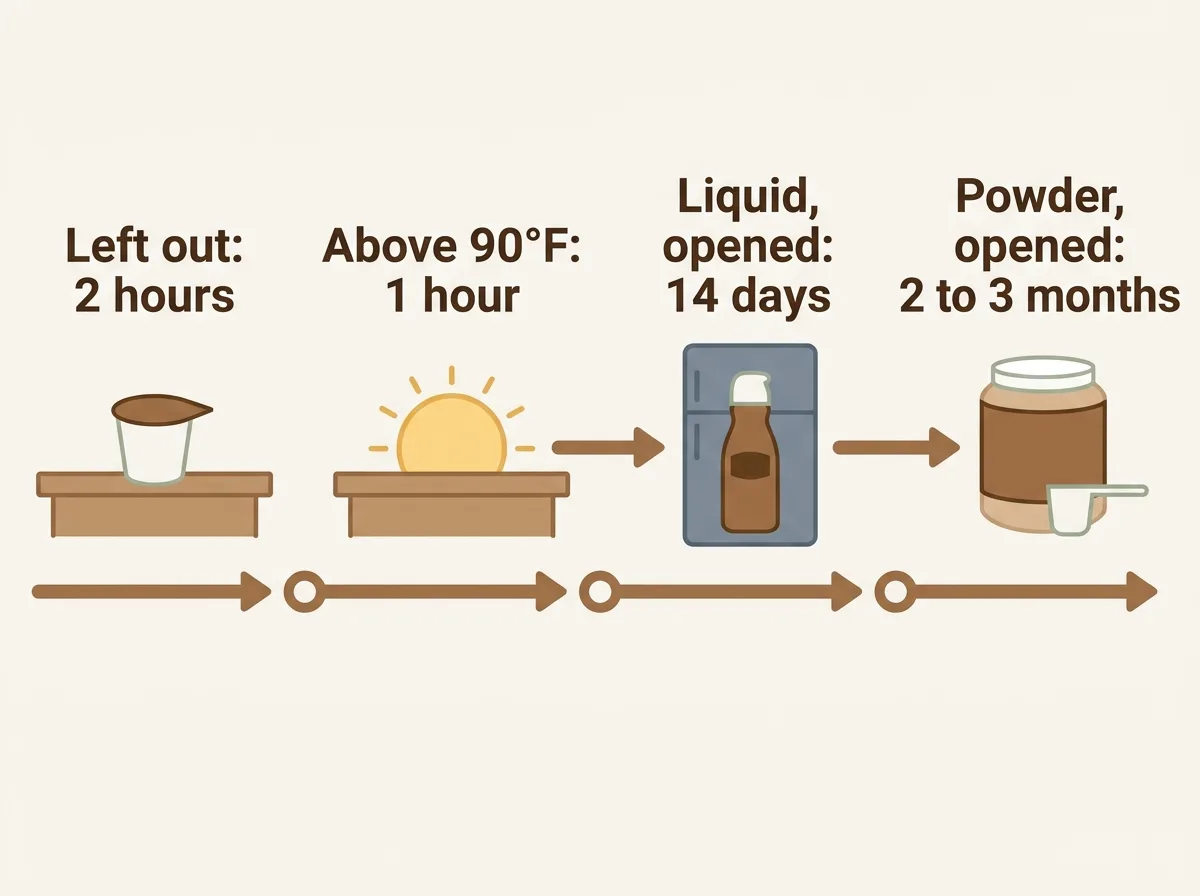
How long creamer keeps, from the counter to the cupboard. Figures from USDA FSIS, USDA FoodKeeper and the Coffee mate and International Delight FAQs.
The reason is temperature. Bacteria multiply fastest between 40°F and 140°F. In that warm band they can double in as little as 20 minutes. [5]
So a bottle left out overnight should go, even if it smells fine. That one hurts, especially with a fresh bottle. Sealed singles are the exception, since they are made for the shelf.
Can you use coffee creamer after the expiration date?
The makers say no. International Delight answers that question with a flat "No" and points you to the code date. [1] That date is for an unopened bottle, so an open one can turn sooner. [1]
Not every date is a safety line, though. NDSU explains that a "best if used by" date is about flavour and quality. [4] That fits sealed powder, which mostly goes stale and loses taste.
Liquid creamer is different. It is perishable, and a bottle that is past its date or past its 14 days is a gamble. Germs that grow in food left warm can reach levels that cause illness, and you cannot always see them. [5] NDSU's rule is the one to follow: "When in doubt, throw it out." [4]
Does powdered creamer go bad?
Yes, but it takes a long time. A sealed tub is good for up to 2 years, and an open one for 2 to 3 months. [3] FoodKeeper's tip is short: "Store in a dry, cool environment." [3]
Moisture is the real problem with powder. A wet spoon starts clumps, which is why Coffee mate tells you to use a dry, clean one. [2] Powder that smells stale or oily has gone off. It will not taste right in your coffee anyway.
How do you know if coffee creamer has gone bad?
Your nose and eyes will usually notice the problem. Check for any of these before you pour:
- A sour smell instead of a sweet one.
- Lumps or thick bits in a liquid that should pour smooth.
- Curdled flecks the moment it hits hot coffee.
- Hard or damp clumps in powder.
- Mould on the cap or rim.
If any of these show up, the creamer is done. But passing the sniff test does not make a bottle safe. Count the days from opening and trust the date first.
For what is actually in that bottle, and why some creamers curdle even when fresh, see what's in coffee creamer.
Frequently asked questions
- How long is International Delight creamer good after opening?
- Fourteen days, says the company, as long as the bottle goes back in the fridge after every pour. The date printed on it is for an unopened bottle, so use whichever comes first. Freezing does not stretch that date, by International Delight's own FAQ.
- How long is unopened creamer good for in the fridge?
- Until the date on the bottle. That date is the maker's last recommended day for a sealed container. USDA's FoodKeeper gives a rough guide of three weeks in the fridge from purchase for liquid creamer, but the printed date is the better number for your bottle.
- Can you freeze coffee creamer to make it last longer?
- You can freeze it, but it will not buy you extra time. International Delight says freezing does not extend its creamer's freshness date, and the creamer is still best used by the date on the bottle. Thawed creamer can also separate, so shake it well.
- How long does half and half last in the fridge?
- Less time than flavoured creamer. USDA's FoodKeeper lists half and half at 3 to 4 days in the fridge, counted from the day you buy it. It can be frozen for up to 4 months, though the texture may change once thawed.
References
Every factual claim in this article is drawn from the sources below. See the source library for how we grade evidence.
- [1]International Delight FAQ: Shelf Life and StorageDanone North America · 2026 · Reference work · Tier 3 · Contextual
- [2]Coffee mate FAQs: storage and shelf life (archived copy, 2021)Nestlé USA · 2021 · Reference work · Tier 3 · Contextual
- [3]FoodKeeper data (coffee creamer, liquid refrigerated and powdered; cream, half and half)USDA Food Safety and Inspection Service · 2026 · Official dataset · Tier 1 · Strong
- [4]Food Storage Guide: Answers the Question (FN579)NDSU Extension · 2023 · Agency guidance · Tier 2 · Moderate
- [5]Danger Zone (40 °F to 140 °F)USDA Food Safety and Inspection Service · 2023 · Agency guidance · Tier 1 · Strong
Related reading
- Brewing ScienceWhat Is in Coffee Creamer? Homemade vs Store-Bought→
- Brewing ScienceCoffee Cupping: How SCA Sensory Evaluation Works→
- Brewing ScienceCoffee Strength vs Caffeine: They're Not the Same→
- Brewing ScienceWhat Is Coffee Bloom? CO₂, Degassing, and Why It Matters→
- Brewing ScienceCoffee Grounds for Plants: What Is in Them, Where They Go→
- Brewing ScienceDoes Coffee Have Tannins? Yes, Though Less Than Tea→