Golden Milk (Turmeric Latte): The Complete Guide
By Coffee Studies Editorial·Published July 16, 2026·10 min read
Quick answer
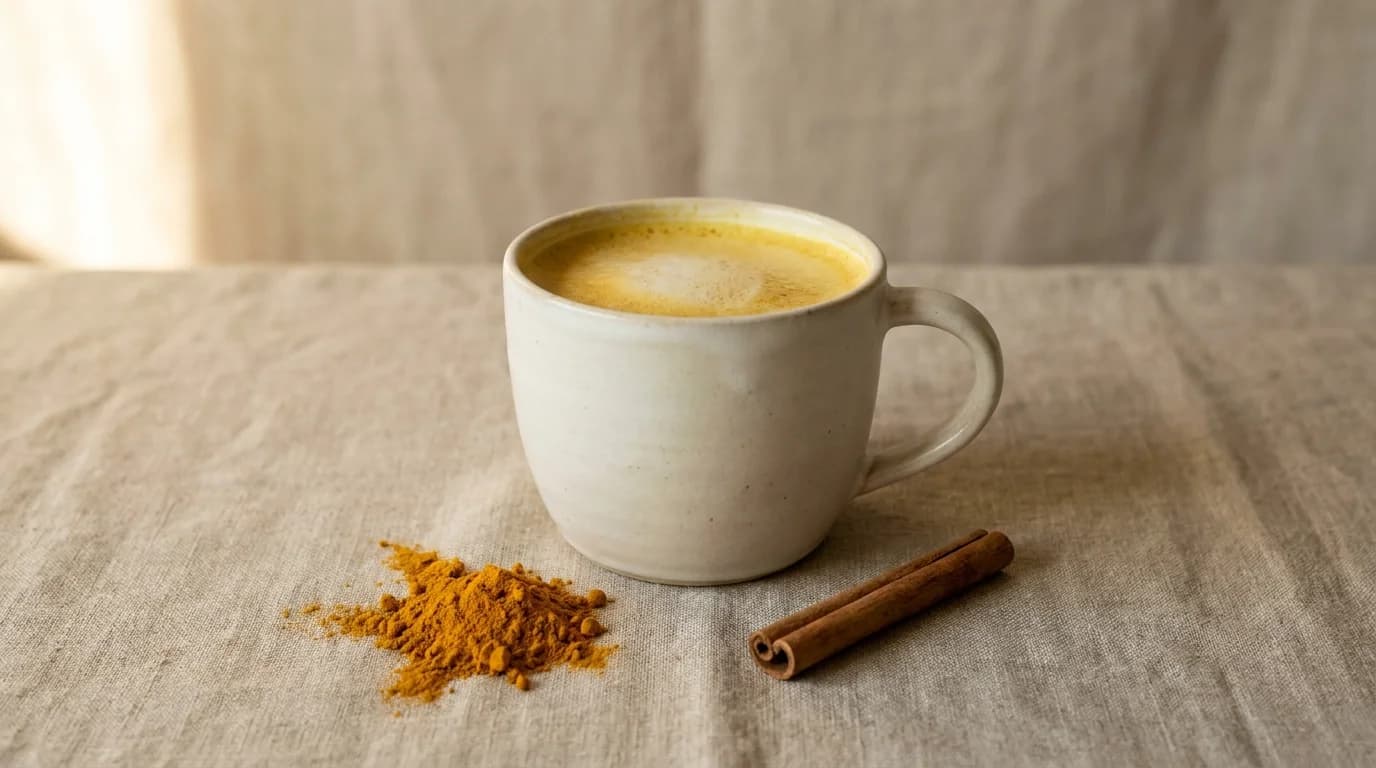
Golden milk did what most Ayurvedic home remedies never do: it became a global café trend. Between 2015 and 2018 the turmeric latte went from an obscure home-kitchen drink in South Asian households to a menu fixture in coffee shops from Melbourne to Berlin to Brooklyn. Some of the health claims that came with the trend held up well under scrutiny. Others didn't. This guide covers what golden milk actually is, how the interesting parts of its biochemistry actually work, and what the evidence honestly supports.
~3%
curcumin content of turmeric root — the compound behind most of the bioactivity claims[3]
~20x
approximate increase in curcumin bioavailability when co-administered with piperine (black pepper alkaloid) in a human volunteer study[2]
0 mg
golden milk is caffeine-free — a viable evening alternative to coffee or tea[9]
What golden milk actually is
Golden milk is a warm spiced drink built around three components:
- Turmeric (Curcuma longa), a rhizome in the ginger family native to South Asia. Bright orange-yellow when peeled and ground, used for millennia in Indian cooking and Ayurvedic home practice[7][1].
- Milk, traditionally cow or buffalo milk in Indian households, now often coconut, oat, almond, or other plant milks in Western versions.
- Black pepper, whose alkaloid piperine plays a specific biochemical role we'll return to below.
Traditional recipes add other spices — ginger, cinnamon, cardamom, sometimes nutmeg, cloves, or saffron — and often a sweetener like honey, jaggery, or maple syrup. The result is a warm, spicy, faintly bitter-sweet, deep golden-orange drink with a distinct earthy-peppery character.
In India, this drink is called haldi doodh ("turmeric milk"), sometimes haldi ka doodh, and is a common home remedy for colds, sore throats, general winter warming, and as a bedtime drink for children[7]. It is domestic, not medicinal in the pharmacological sense — no Ayurvedic practitioner is prescribing it in doses; it's what grandmothers make when someone in the house is under the weather.
The curcumin story (with hedging)
Most of the health interest in golden milk comes from a single class of compounds: curcuminoids, primarily curcumin. Curcumin is the pigment that makes turmeric orange-yellow and is the most- studied bioactive in the rhizome.
Turmeric is roughly 2-5% curcuminoids by dry weight (the rest is starch, fibre, essential oils, water, and other compounds)[8][3]. Curcumin has been studied extensively for anti-inflammatory, antioxidant, and anti-cancer activity in laboratory (cell culture) and animal experiments — the mechanistic literature runs into the thousands of papers.
But there's a famous problem: curcumin has extremely poor oral bioavailability. Multiple factors converge here — low water solubility, rapid metabolism in the liver and gut wall, quick elimination, and instability at intestinal pH. The consequence is that plasma curcumin levels after typical dietary intakes remain very low, and much of the exciting cell-culture activity may simply not translate to what actually reaches human tissues[3].
This bioavailability problem is the subject of a large research literature and — the honest note — some criticism. A widely cited 2017 review in the Journal of Medicinal Chemistry argued that curcumin is a "PAINS" (pan-assay interference compound) that shows up as biologically active in many assay types partly because of its chemical properties, not necessarily because of specific therapeutic mechanisms[5]. This doesn't mean curcumin has no real activity; it means the literature has to be read carefully, and cell-based claims should not be over-extrapolated to whole-food dietary intake.
Why black pepper is in the recipe
Traditional golden milk recipes almost always include a pinch of black pepper. This turns out to be one of the more mechanistically elegant traditional pairings in the human diet.
Piperine — the main alkaloid in black pepper — inhibits several of the metabolic enzymes and transporters that clear curcumin from the body. A 1998 pharmacokinetic study by Shoba and colleagues gave healthy human volunteers 2 g of curcumin, with or without 20 mg of piperine. With piperine, curcumin's bioavailability increased substantially — the paper reports about a 20-fold increase in plasma curcumin — and the maximum concentration was reached faster[2].
That study is small, uses concentrated doses, and has been qualified by later work. But the underlying mechanism — piperine inhibits glucuronidation and hepatic first-pass metabolism, letting more curcumin reach circulation — is well-established. It is one of the better-supported "food synergy" stories in the popular health literature.
Fat matters too. Curcumin is fat-soluble, and consuming it with dietary fat improves absorption. This is another reason traditional golden milk uses whole milk or coconut milk rather than water — the fat carries the curcumin.
So the traditional formulation (turmeric + pepper + fatty milk + warm) isn't a random combination. It's a reasonable practical strategy for improving what would otherwise be near-zero absorption of the target compound.
What the research actually shows
What the research says
The mechanistic case for curcumin's biological activity — anti- inflammatory, antioxidant, effects on various cell-signalling pathways — is well-developed in laboratory studies[4]. The clinical translation is less consistent.
Osteoarthritis and joint pain has the strongest human evidence. A 2016 systematic review and meta-analysis of eight randomised controlled trials found that turmeric extracts (typically 500-1000 mg/day of standardised curcumin) produced modest improvements in joint pain and function compared to placebo, comparable in magnitude to some over-the-counter anti-inflammatories, with fewer GI side effects at typical doses[6]. These trials used concentrated extracts, not culinary intake.
Inflammatory markers — several small human trials have shown modest reductions in C-reactive protein and other inflammatory markers with concentrated curcumin supplementation, though study quality varies and effect sizes are modest[4].
General health claims — cardiovascular, cognitive, metabolic, cancer prevention, immune — are the subject of active research but the human evidence is preliminary, mixed, or absent. The overwhelming majority of positive findings come from cell culture or animal studies at doses far above what dietary intake can deliver[4][3].
How much curcumin is in a cup of golden milk? A typical recipe uses 1/2 to 1 teaspoon of ground turmeric (roughly 1-3 g), which contains about 20-100 mg of total curcuminoids. Piperine and fat help absorption, but the delivered curcumin dose is still well below the 500-2000 mg/day used in clinical trials. This is the key hedge: whole-food golden milk is unlikely to produce clinically meaningful anti-inflammatory or metabolic effects at typical daily intakes. If you want a curcumin effect at supplementation levels, a standardised extract is a more direct route.
Golden milk is caffeine-free, so contributes nothing to the 400 mg daily caffeine ceiling that FDA and Health Canada set for healthy adults[9][10].
The honest position: enjoy golden milk as a warming, tasty, caffeine-free spiced drink. Don't rely on it as a treatment for anything. And be sceptical of marketing that promises inflammation reduction, immune boosting, or metabolic transformation from a daily cup — those claims run past what the evidence supports at dietary intake levels.
When it became a Western wellness trend
Turmeric has been in Western pantries as a curry-powder ingredient for a century. As a stand-alone functional food, its Western moment came around 2015-2016.
A convergence of factors pushed it: broader Western interest in Ayurveda and South Asian home traditions; the rise of "wellness" media (blogs, Instagram, health-focused podcasts) that amplified curcumin research findings; the general trend toward caffeine- alternative café menu items; and the striking visual appeal of a golden-orange drink in a photograph — the "gram-worthy" factor is real for food trends.
Café chains and specialty coffee shops added turmeric lattes to menus starting around 2016. By 2017-2018 it had crossed into mainstream awareness. It has since receded from peak trend status but remains a common menu item at cafés with a health-oriented positioning.
The trend brought both real benefit (more people exposed to a genuinely tasty, low-risk drink; more research funding for turmeric and curcumin) and real overreach (marketing claims that one cup daily would meaningfully suppress inflammation or "detox" the body — claims that don't survive scrutiny at dietary doses).
Making a good cup at home
Homemade golden milk is easily better than the powdered-mix or café versions, and takes about five minutes.
Basic recipe (1 cup)
- 1 cup milk of choice (whole cow's milk, oat, coconut, or almond work well; nonfat is less good because fat helps curcumin absorption)
- 1/2 to 1 teaspoon ground turmeric
- Pinch (about 1/8 tsp) freshly ground black pepper
- 1/4 tsp ground ginger (or a small piece fresh grated)
- 1/4 tsp ground cinnamon
- Small pinch cardamom
- 1-2 tsp honey, maple syrup, or jaggery to taste
- Optional: pinch of nutmeg, tiny knob of coconut oil for extra fat
Method
- Combine milk and all spices in a small saucepan.
- Warm over medium-low heat, whisking constantly, until steaming but not boiling (about 3-5 minutes). Boiling will scorch the milk and can make it taste bitter.
- Sweeten to taste at the end (adding sweetener at high heat can change flavour and destroys some of the enzymes in raw honey).
- Pour into a mug. Optional: froth with a milk frother for a café-style top.
Tips
- Use fresh spices. Turmeric loses potency over time; if the jar in your cupboard is more than a year old, replace it.
- Fresh turmeric root is spectacular if you can find it — a small knob (about 1 cm) grated into the pan gives a brighter, fresher, more complex flavour. Warning: it will stain everything vividly yellow — cutting boards, hands, sinks.
- Sweetness matters. Unsweetened golden milk can taste medicinal to Western palates. Even a small amount of honey or maple lifts it dramatically.
- Coconut milk version (from a can, not the drinkable kind) makes a rich, dessert-like variant.
Golden milk vs coffee vs other alternatives
| Golden milk | Coffee | Chicory coffee | Rooibos | |
|---|---|---|---|---|
| Caffeine per cup | 0 mg | 80-100 mg | 0 mg | 0 mg |
| Flavour | Spiced, sweet, earthy | Roasted, bitter | Roasty, bitter | Sweet, nutty |
| Best time of day | Morning or evening | Morning | Anytime | Anytime |
| Fits with milk? | Yes (integral) | Yes | Yes | Yes |
| Distinctive bioactive | Curcumin (poorly bioavailable) | Chlorogenic acids, caffeine | Inulin, chlorogenic acids | Aspalathin, nothofagin |
| Sleep impact | None | Depends on timing/dose | None | None |
Golden milk sits in the "warm evening caffeine-free ritual drink" category with chicory coffee and rooibos, but tastes and functions differently. Coffee alternatives don't all need to mimic coffee — golden milk succeeds precisely by being unapologetically not coffee.
Who golden milk is a good fit for
- People eliminating caffeine. A warm, spiced, satisfying drink that works morning through evening.
- People who want variety in their coffee alternatives. A break from the roasty-bitter category (chicory, dandelion, Postum) into something spicy, sweet, and warming.
- People who like Ayurvedic home traditions. A drink with centuries of household use behind it.
- People with mild joint discomfort who find whole-food turmeric palatable. Golden milk won't match the effect of a standardised curcumin supplement, but it contributes meaningfully more curcumin than typical curry-based dietary intake, and the piperine-plus-fat delivery mechanism is reasonable.
- People who want an evening warm drink that won't disrupt sleep the way a late espresso would.
Who might want to be cautious
- People on blood-thinning medications (warfarin, direct oral anticoagulants). High-dose curcumin has been observed to modestly affect coagulation in some studies. Culinary intake is unlikely to be an issue; concentrated supplements need medical discussion.
- People with gallstones or bile-duct obstruction. Turmeric can stimulate gallbladder contraction — usually helpful, but potentially problematic in the presence of stones.
- People on medications with narrow therapeutic windows. Piperine's inhibition of drug-metabolising enzymes could theoretically affect drug levels. Culinary amounts are unlikely to matter; regular high intake with medications warrants checking with a clinician.
- People with allergies to ginger or related spices. Turmeric is in the same family (Zingiberaceae).
- Pregnant women in high doses. Occasional culinary intake during pregnancy is considered safe; high-dose supplemental curcumin is not well-studied and is generally avoided.
The honest summary
Golden milk is a genuinely nice drink with a genuinely interesting piece of biochemistry inside it. The piperine-plus-fat mechanism for improving curcumin absorption is real and well-supported. The downstream effect on human health at typical daily intake is modest, and probably nowhere near what wellness marketing tends to claim. Drink golden milk because it's warming, delicious, spiced, caffeine-free, and satisfying — not because you expect it to replace anti-inflammatory medication or "detoxify" anything. On those honest terms, it earns a place in the coffee-alternatives shelf easily.
Frequently asked questions
- What is golden milk?
- Golden milk is a warm, spiced drink made from turmeric, milk (dairy or plant-based), and black pepper, usually with additional spices like ginger, cinnamon, and cardamom, and often sweetened with honey or maple syrup. In India it is known as haldi doodh and has been a household home-remedy drink for centuries — typically for colds, sore throats, or general winter warming. It became a Western café trend around 2015-2016 and is now widely available in coffee shops as a caffeine-free 'turmeric latte.'
- Does black pepper really improve curcumin absorption?
- Yes, this is one of the better-established parts of the golden milk story. Curcumin — the main bioactive in turmeric — has very poor bioavailability on its own. A well-known pharmacokinetic study found that co-administering 20 mg of piperine (black pepper's main alkaloid) with curcumin increased its bioavailability substantially in human volunteers. Fat also helps, since curcumin is fat-soluble. This is why traditional golden milk recipes combine turmeric, black pepper, and whole milk or coconut milk — the combination is not just cultural, it's mechanistically reasonable.
- Does golden milk actually help with inflammation?
- Cautiously — the picture is more nuanced than wellness marketing suggests. Curcumin has clear anti-inflammatory activity in laboratory and animal studies. Human trials, particularly for osteoarthritis symptoms, have shown modest benefit at concentrated turmeric extract doses (500-1000 mg per day of standardised curcumin). However, the amount of curcumin in a typical cup of golden milk is small (roughly 20-100 mg per cup, of which only a fraction is absorbed). Whole-food golden milk is unlikely to produce clinically meaningful anti-inflammatory effects at typical intakes. Its main appeal is as a warming, tasty, ritual drink.
- How do you make golden milk at home?
- Standard recipe for one cup: warm 1 cup of milk (dairy or plant, coconut or oat work well) in a small saucepan. Whisk in 1/2 to 1 teaspoon of ground turmeric, a pinch of freshly ground black pepper, 1/4 teaspoon each of ground ginger and cinnamon, a pinch of cardamom, and sweetener to taste (1-2 teaspoons of honey or maple syrup). Simmer gently for 3-5 minutes, whisking to prevent scorching. Strain if using whole spices. Best served warm. Fresh grated turmeric works beautifully if you can find it, though it stains everything vividly.
- Is golden milk a good coffee substitute?
- For flavour, no — it doesn't taste like coffee. For function (warm caffeine-free ritual drink in the morning or evening), yes. Golden milk is caffeine-free, spiced, satisfying, and comforting in a way that plain herbal tea often isn't. It works particularly well as an evening drink, since it won't disrupt sleep, and pairs well with plant milks for people avoiding both dairy and caffeine.
References
Every factual claim in this article is drawn from the sources below. See the source library for how we grade evidence.
- [1]Turmeric (Curcuma longa) — botany, composition, and traditional useEncyclopedia Britannica · 2024 · Reference work · Tier 3 · Contextual
- [2]Influence of piperine on the pharmacokinetics of curcumin in animals and human volunteersPlanta Medica · 1998 · Controlled trial · Tier 2 · Moderate
- [3]Bioavailability of curcumin: problems and promisesMolecular Pharmaceutics · 2007 · Review · Tier 2 · Moderate
- [4]Curcumin: A review of its effects on human healthFoods · 2017 · Review · Tier 2 · Moderate
- [5]The essential medicinal chemistry of curcuminJournal of Medicinal Chemistry · 2017 · Review · Tier 2 · Moderate
- [6]Efficacy of turmeric extracts and curcumin for alleviating the symptoms of joint arthritis: A systematic review and meta-analysis of randomized clinical trialsJournal of Medicinal Food · 2016 · Meta-analysis · Tier 1 · Strong
- [7]Turmeric, the Golden Spice: From Traditional Medicine to Modern MedicineHerbal Medicine: Biomolecular and Clinical Aspects (CRC Press/Taylor & Francis) · 2011 · Review · Tier 2 · Moderate
- [8]USDA FoodData Central: Turmeric, ground (SR Legacy 172231)USDA Agricultural Research Service · 2019 · Official dataset · Tier 2 · Moderate
- [9]Spilling the Beans: How Much Caffeine Is Too Much?U.S. Food and Drug Administration · 2024 · Agency guidance · Tier 1 · Strong
- [10]Caffeine in foodsHealth Canada · 2022 · Agency guidance · Tier 1 · Strong
Related reading
- Coffee AlternativesChicory Coffee: A Complete Guide→
- Coffee AlternativesRooibos Tea: The South African Alternative→
- Coffee AlternativesCoffee Alternatives: A Guide to What Actually Works→
- Coffee AlternativesWhat Is Cascara? Tea Brewed from Coffee Cherry Husks→
- Coffee AlternativesGuayusa: The Amazonian Caffeine Leaf→
- Coffee AlternativesPostum and Roasted Grain Coffee: The Cereal Beverage Story→