Guayusa: The Amazonian Caffeine Leaf
By Coffee Studies Editorial·Published July 16, 2026·9 min read
Quick answer
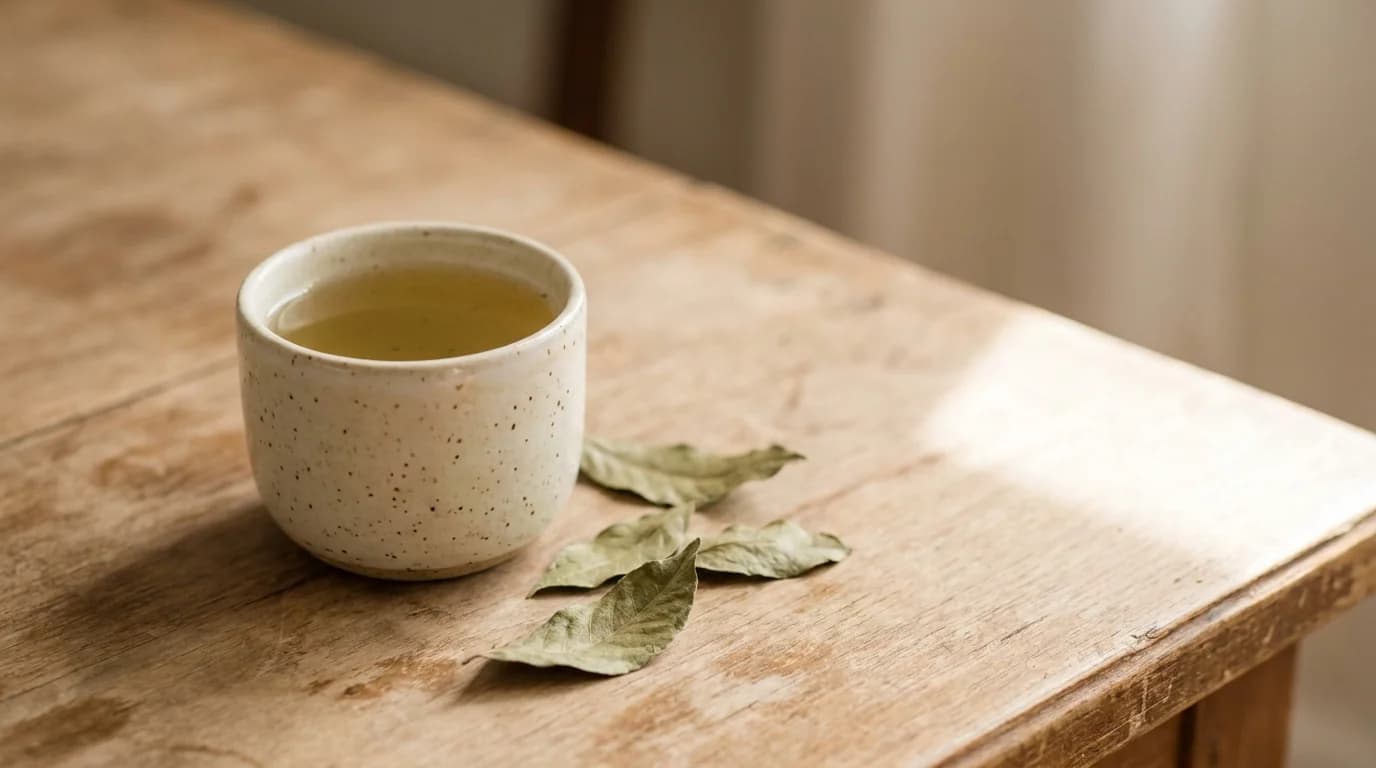
Guayusa is one of the least-known caffeinated plants in the world and one of the most important in the culture of its home region. In the Ecuadorian Amazon, Kichwa communities have brewed and drunk it before dawn for generations. Outside that region, until roughly fifteen years ago, almost no one had heard of it. That started to change when a US-founded brand pulled guayusa into North American retail. For a broader map of options beyond coffee, see our overview of coffee alternatives.
~75 mg
typical caffeine in a prepared cup of guayusa — comparable to a strong green tea, slightly below coffee[2]
Kichwa
the plant's traditional stewards are Kichwa communities of the Ecuadorian Amazon, where guayusa has been used for centuries[1]
2009
the year Runa was founded — the brand credited with introducing guayusa to North American markets[4]
What guayusa actually is
Guayusa is Ilex guayusa, an evergreen tree in the holly family native to the upper Amazon basin, principally in eastern Ecuador with smaller populations in northern Peru and southern Colombia[1]. Like its better-known cousin yerba mate, it is a caffeinated Ilex species — one of only a handful of hollies in the world that produce meaningful amounts of caffeine.
The plant is a small-to-medium tree with dark green leathery leaves. It has been cultivated for so long by Amazonian communities that truly wild populations are rare — most of what grows is either cultivated in chakras (traditional agroforestry plots) or is descended from long-ago plantings that have gone semi-wild.
Interestingly, Ilex guayusa rarely flowers or fruits in cultivation, and modern botanists were slow to formalise its taxonomy for that reason. It reproduces almost entirely through cuttings, propagated across generations of farmers in the same communities[1].
The Kichwa tradition
The oldest known guayusa use predates written records. Archaeological finds of guayusa leaves in a Bolivian tomb have been dated to approximately 1,500 years ago — well outside the plant's native range, suggesting long-distance trade in the pre-Columbian period[4].
Today, guayusa is a daily household ritual in Kichwa (Runa Simi- speaking) communities of the Ecuadorian Amazon. The traditional preparation is a pre-dawn family gathering: guayusa leaves are simmered in a pot of water over a low fire for an hour or more, and the household — often multiple generations — sits together in the early morning to drink the strong infusion, tell stories, and interpret dreams from the previous night. The gathering is foundational to the daily rhythm of village life.
The name Runa — chosen by the modern brand — comes from the Kichwa self-designation, meaning "people" or "human beings." Runa Simi ("the people's tongue") is the language spoken by Kichwa communities across highland and Amazonian Ecuador.
Chemistry: caffeine, theobromine, polyphenols
Guayusa's chemistry is broadly similar to yerba mate's, reflecting their close botanical relationship. Composition studies find:
- Caffeine at roughly 2–3% by dry weight, sometimes higher — a concentration comparable to the more caffeinated grades of tea and in the same range as yerba mate[2].
- Theobromine in meaningful amounts — the same alkaloid found in chocolate and mate, milder than caffeine but a contributor to the overall stimulant profile[2].
- Chlorogenic acids and other polyphenols — a substantial antioxidant fraction, with a phenolic profile documented in several analytical studies[3].
- Trace theophylline in some samples, though at levels too small to matter functionally at typical intakes.
Notably, guayusa contains almost no tannins — the astringent compounds that give tea (and, to a lesser extent, mate) its characteristic pucker. This is a big part of why guayusa tastes smoother and less bitter than either tea or mate at comparable caffeine levels[4].
Figure
Caffeine per typical serving: guayusa vs common caffeinated drinks
Values in mg caffeine per serving
What guayusa tastes like
Guayusa's flavour is its main selling point outside the Amazon. Compared to its close relatives:
- Milder than yerba mate. Where mate is grassy, sharply bitter, and alfalfa-like, guayusa is smoother, softer, and only faintly bitter — closer in feel to a mellow green tea than to the aggressive vegetal edge of traditional mate.
- Faintly sweet. Many drinkers describe a natural mild sweetness from the leaves, especially in a slow long simmer.
- Earthy, warm. Rather than the "fresh grass clippings" note of mate, guayusa reads as forest-floor, mildly woody, with a soft earthy character.
- Low astringency. The near-absence of tannins means guayusa does not pucker the mouth the way a strongly steeped black tea does. It is unusually forgiving of long steeps[4].
This palatability is part of why guayusa translates well to bottled and canned ready-to-drink formats. Where a canned mate almost always needs sweetening and flavouring to hit a consumer palate, guayusa is much closer to drinkable on its own.
Runa: the brand that opened the export market
The story of how guayusa reached North American shelves is essentially the story of one brand. Runa was founded in 2009 by Tyler Gage and Dan MacCombie, then undergraduates at Brown University in Rhode Island. Gage had done a Fulbright research fellowship in the Ecuadorian Amazon studying Kichwa cultural practices, encountered guayusa in a Kichwa household, and returned convinced there was both a business and a conservation case for it.
The company built a grower cooperative structure with Kichwa farming communities in Napo province, paying above-market prices for sun-dried leaves and formalising a supply chain that had never previously existed on commercial scale. The Cornell food science program contributed early technical support for shelf-stable brewing and processing[4].
Runa launched initial products — loose leaves, tea bags, then ready- to-drink cans — in US natural-foods and specialty channels in 2010–2012. The brand grew steadily and was acquired by the beverage company All Market Inc. (parent of Vita Coco) in 2018. Its role in opening the guayusa export market — building processing infrastructure in Napo, defining the category for US consumers, and setting the default price point — is uncontested, whether or not you like the subsequent corporate trajectory.
Other brands have since entered the category (Waykana, Amazon Wellness, various smaller Ecuadorian exporters), but Runa remains the reference point for most North American guayusa drinkers.
How guayusa is brewed
Three common preparations, in ascending strength:
Bagged (tea-style)
The most accessible option outside Ecuador. Steep a bag in ~8 oz of hot water (around 85–90°C) for 3–5 minutes. The result is a light amber cup with a soft, earthy, faintly sweet character. Because guayusa lacks tannins, over-steeping doesn't turn it bitter the way over-steeped black tea does — it just becomes stronger.
Loose leaf, brewed like tea
Use about 1–2 tablespoons of dried loose leaf per 8 oz of water, steeped for 5–8 minutes at 85–90°C. Strain and drink. This delivers a stronger cup with more of the depth and body that traditional preparations aim for.
Traditional simmer
The traditional Kichwa preparation uses a large handful of leaves simmered in a covered pot of water over low heat for 30 minutes to several hours. The resulting infusion is dark, rich, and strong — and the pot is often re-topped with water through the morning to keep the drink flowing for a shared session.
For all preparations, guayusa is typically drunk plain. It doesn't need milk or sugar to be pleasant, though some drinkers add a squeeze of lemon or a small amount of honey.
Availability
Outside Ecuador and neighbouring regions, guayusa is most easily found in three formats:
- Ready-to-drink cans — Runa's original US retail product, still the most visible format in North American grocery.
- Bagged tea — sold as pure guayusa or in blends (often with mint, ginger, or lemon) in natural-foods stores and online.
- Loose leaf — from Runa, Waykana, and a handful of specialty importers; usually the best-value option per cup for regular drinkers.
Prices are moderate — comparable to good-quality loose-leaf tea rather than to specialty coffee or ceremonial matcha. A pound of loose guayusa typically runs $15–25 in North America and yields dozens of strong cups.
Guayusa vs yerba mate
The natural comparison for anyone new to guayusa is yerba mate, its close cousin. In one sentence: similar chemistry, milder taste, smaller export tradition, no traditional gourd ritual outside its home region.
Guayusa delivers roughly comparable caffeine per cup, similar theobromine, similar polyphenol profile, but with substantially less bitterness and no strong tradition (in commercial export markets) of the shared gourd-and-bombilla ritual that defines mate. For someone who found mate too grassy, aggressive, or bitter, guayusa is often the easier drink.
For a fuller mate deep-dive, including brewing, chemistry, and the IARC temperature signal that also applies to any very hot infusion, see the yerba mate article.
What the research says
Composition studies confirm that guayusa contains meaningful amounts of caffeine, theobromine, and chlorogenic acid polyphenols — supporting the practical experience of it being a real caffeinated drink with a comparable bioactive profile to yerba mate[2][3].
The published health-research base for guayusa specifically is small. A systematic review of Ilex guayusa published in 2019 catalogued laboratory and animal studies suggesting antioxidant activity and some metabolic effects, but noted that clinical trials in humans are essentially absent and that any health claims should be treated with caution until such trials appear[4].
Because guayusa is chemically similar to yerba mate, some of the observational evidence associating mate consumption with favourable cardiovascular markers is plausibly relevant to guayusa as well — but this is inference, not direct evidence. The prudent framing: guayusa is a caffeinated infusion with a polyphenol profile comparable to other well-studied caffeinated beverages, and there is no evidence base yet to make specific health claims about it.
Common misconceptions
- "Guayusa is like green tea." Similar leaf-brewing preparation and roughly comparable caffeine, but botanically unrelated — green tea is Camellia sinensis; guayusa is a holly (Ilex). The chemistry differs (guayusa lacks tannins; tea contains them heavily) and the flavour differs meaningfully.
- "Guayusa is caffeine-free / a smooth non-stimulant." No. Guayusa is genuinely caffeinated at approximately 75 mg per cup — more than most steeped teas and only moderately below brewed coffee[2]. It feels smoother than coffee but is not a decaf substitute.
- "Runa invented guayusa." They didn't — the plant has been used by Kichwa communities for at least a thousand years and probably longer. Runa built the export market and processing infrastructure; the drink itself is ancient[1].
- "It's rare and hard to find." Increasingly less true. Ready-to-drink cans and bagged guayusa are stocked in most North American natural-food chains, and loose leaf is straightforward to order online.
The honest summary
Guayusa is a caffeinated holly-leaf infusion from the Ecuadorian Amazon with centuries of Kichwa cultural use and roughly fifteen years of commercial presence outside its home region. Per prepared cup it delivers around 75 mg of caffeine — meaningfully more than most teas, moderately less than coffee or a comparable serving of yerba mate — alongside theobromine and a polyphenol profile similar to its better-known cousin.
The taste is where guayusa's practical appeal sits: smoother, less bitter, and less astringent than either tea or yerba mate at comparable caffeine levels. For drinkers curious about mate but put off by its aggressive vegetal edge, guayusa is often the friendlier first cup. For anyone building a rotation of caffeinated drinks beyond coffee, it is a genuinely distinct addition — botanically related to mate, culturally rooted in the Amazon, and increasingly easy to actually buy.
Frequently asked questions
- How much caffeine is in guayusa?
- A typical prepared cup of guayusa contains roughly 75 mg of caffeine, though composition studies find wide variation across leaf samples — anywhere from about 2% to over 3% caffeine by dry weight in some analyses. That puts a standard cup in the same range as most brewed teas and slightly below a standard cup of coffee or yerba mate.
- Is guayusa the same as yerba mate?
- No, but they are closely related. Both are species of Ilex — the holly genus — and share a similar chemistry profile (caffeine, theobromine, chlorogenic acids). Guayusa is Ilex guayusa, native to the Ecuadorian Amazon; yerba mate is Ilex paraguariensis, native to the Paraná basin further south. Guayusa is generally milder and less bitter than mate.
- What does guayusa taste like?
- Milder than yerba mate. Guayusa is earthy, mildly grassy, faintly sweet, and low in the sharp bitterness that defines mate. Many drinkers describe it as smoother and more approachable — closer to a mellow green tea than to the intensity of a traditional gourd of Argentine yerba.
- Who is Runa and why does the brand matter?
- Runa is the Ecuadorian guayusa brand founded in 2009 by Tyler Gage and Dan MacCombie, then Brown University students, after Gage's Fulbright research in the Ecuadorian Amazon. The brand is credited with introducing guayusa to North American markets and building a grower cooperative structure with Kichwa communities. It was acquired by Vita Coco in 2018.
- Is guayusa safe to drink daily?
- For healthy adults, yes, at typical intakes. Guayusa's caffeine content is well below the FDA and Health Canada guideline of 400 mg per day — you would need to drink roughly five cups to approach the limit. Pregnant people, caffeine-sensitive individuals, and people on certain medications should follow the same caffeine-intake caveats that apply to coffee and tea.
References
Every factual claim in this article is drawn from the sources below. See the source library for how we grade evidence.
- [1]Guayusa (Ilex guayusa L.): New taxonomic and morphological data on a caffeine-rich Amazonian plantJournal of Ethnopharmacology · 2012 · Review · Tier 2 · Moderate
- [2]Ilex guayusa Loes. leaves: methylxanthine and phenolic acid contentJournal of Ethnopharmacology · 2015 · Observational study · Tier 2 · Moderate
- [3]Guayusa (Ilex guayusa L.) new tea: Phenolic and carotenoid composition and antioxidant capacityJournal of the Science of Food and Agriculture · 2017 · Observational study · Tier 2 · Moderate
- [4]Ilex guayusa: a systematic review of its traditional uses, chemical constituents, biological activities and biotechnological transformationJournal of Applied Pharmaceutical Science · 2019 · Review · Tier 2 · Moderate
- [5]Yerba Mate Tea (Ilex paraguariensis): a comprehensive review on chemistry, health implications, and technological considerationsJournal of Food Science · 2007 · Review · Tier 2 · Moderate
- [6]Spilling the Beans: How Much Caffeine Is Too Much?U.S. Food and Drug Administration · 2024 · Agency guidance · Tier 1 · Strong
- [7]Caffeine in foodsHealth Canada · 2022 · Agency guidance · Tier 1 · Strong
Related reading
- Coffee AlternativesYerba Mate: The South American Coffee Alternative→
- Coffee AlternativesYerba Mate vs Coffee: Caffeine, Effects, Differences→
- Coffee AlternativesCoffee Alternatives: A Guide to What Actually Works→
- Coffee AlternativesMatcha vs Coffee: Caffeine, L-Theanine, and Differences→
- Coffee AlternativesGolden Milk (Turmeric Latte): The Complete Guide→
- Coffee AlternativesWhat Is Cascara? Tea Brewed from Coffee Cherry Husks→