Matcha vs Coffee: Caffeine, L-Theanine, and Differences
By Coffee Studies Editorial·Published July 14, 2026·6 min read
Quick answer
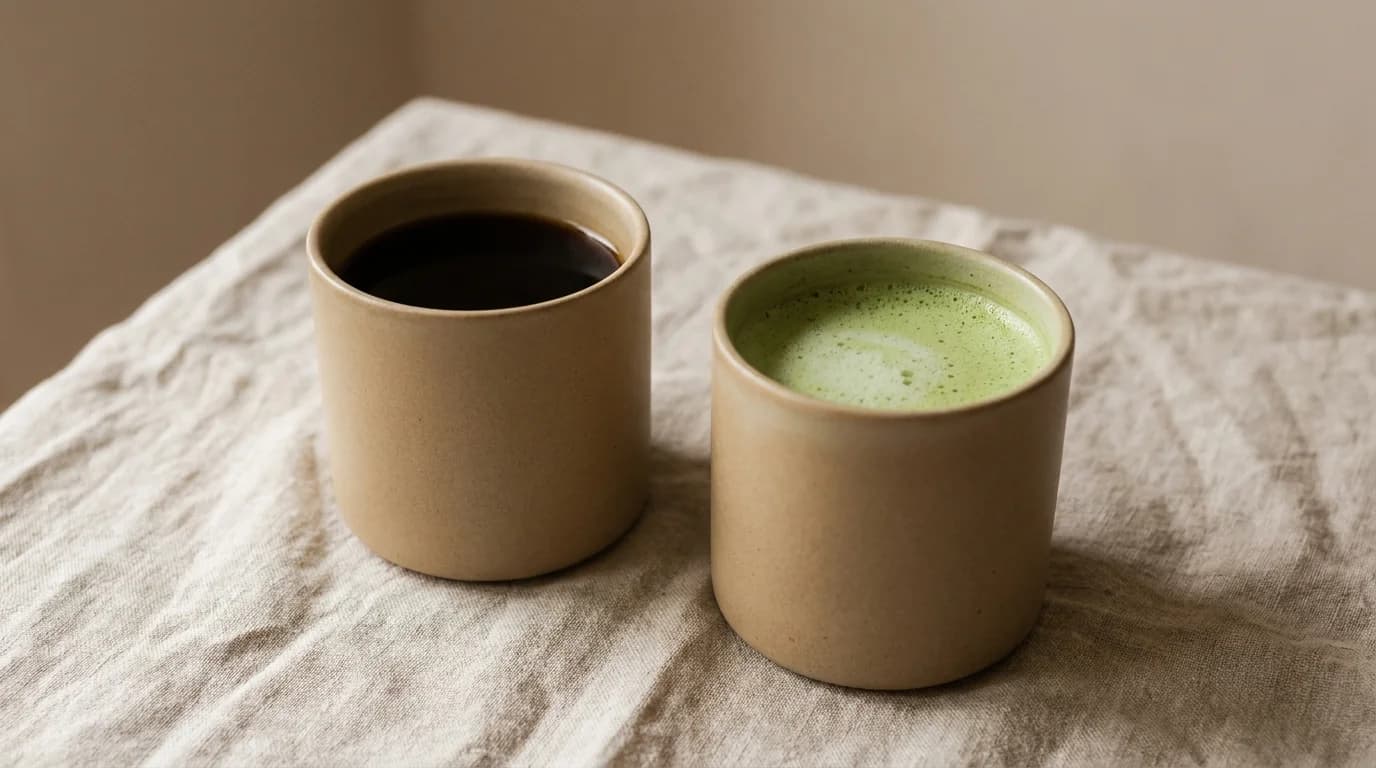
Matcha and coffee do the same job — deliver caffeine and a warm cup — but they get there differently. If you have been switching between them or thinking about it, most of the interesting differences come down to what else is in the cup besides caffeine, and how you personally respond to the two experiences. For a broader map of options, see our overview of coffee alternatives.
~60–70 mg
typical caffeine in a prepared serving of matcha, roughly the same as a cup of instant coffee[1]
+L-theanine
matcha contains meaningful amounts of L-theanine, an amino acid absent from coffee[1]
400 mg/day
daily caffeine amount the FDA cites as not generally a concern for healthy adults[3]
Head-to-head: what's in a cup
Standard servings differ, which makes per-cup comparisons more useful than per-gram or per-ounce ones.
| Matcha (8 oz prepared) | Brewed coffee (8 oz) | Instant coffee (8 oz) | |
|---|---|---|---|
| Caffeine | ~60–70 mg | 80–100 mg | ~60 mg |
| L-theanine | Meaningful amount | None | None |
| Catechins (antioxidants) | High | None | None |
| Chlorogenic acids | None | High | High |
| Calories (black/unsweetened) | ~3 kcal | ~2 kcal | ~2 kcal |
| Typical bitterness | Grassy, vegetal | Roasted, sharp | Muted, roasted |
Matcha figures are drawn from composition analyses of the powdered tea[1]; coffee figures are from USDA FoodData Central[6]. Individual products vary substantially.
The caffeine question, honestly answered
Per prepared serving, coffee wins on total caffeine. A cup of matcha delivers less caffeine than a cup of drip coffee — usually roughly what you'd get from a cup of instant. If your goal is maximum caffeine per drink, coffee is more efficient.
But per gram of dry material, matcha is more caffeine-dense than most teas. Composition analyses put matcha in the range of ~20–45 mg of caffeine per gram of dry powder, higher than most brewed teas[1]. The reason a cup of matcha still has less caffeine than a cup of coffee is that a typical serving uses only 1–2 grams of powder.
The L-theanine difference
The single most-cited reason people prefer matcha's feel to coffee's is L-theanine, an amino acid unique to the tea plant. Matcha contains meaningful amounts because you're consuming the whole ground leaf rather than just an infusion.
L-theanine has been studied for its interaction with caffeine. A Nutrients review of matcha specifically notes that theanine appears to have anti-stress effects that can partially counter caffeine's arousal effects — leaving many drinkers with an experience of alert focus without the jitteriness or anxiety that a same-dose coffee might produce[2].
Two important caveats:
- Effect sizes vary. Studies of theanine + caffeine effects report modest average effects; the subjective difference between "matcha calm" and "coffee wired" is bigger for some people than for others[2].
- Higher-caffeine matcha loses the ratio. The theanine effect depends on the caffeine-to-theanine ratio in the cup. A very strong matcha with two grams of powder shifts closer to coffee's profile.
Figure
L-theanine content per typical serving
Values in mg L-theanine per serving
What the research says
Composition studies of matcha document meaningful amounts of caffeine alongside L-theanine, EGCG (a catechin), and other polyphenols — supporting the practical experience of it being caffeine-plus- something-else rather than just tea[1].
Research on the caffeine-theanine combination suggests it may produce a different subjective experience than caffeine alone: more sustained attention, less anxiety, smaller pressor response. Effect sizes are moderate and individual responses vary[2].
On the broader health question, coffee and green tea both appear in the same neutral-to-favorable evidence base for cardiovascular and metabolic outcomes at moderate habitual intake[5]. Neither is meaningfully "the healthy choice" — both are fine choices, and preference matters more than population-level averages.
Taste and ritual
The sensory profile is where matcha and coffee are least comparable. They aren't trying to taste like each other.
- Coffee — roasted, bitter, with acidity and body that varies hugely across beans and brew methods. The bitterness is the flavour center; sugar and milk are common softeners.
- Matcha — grassy, vegetal, umami-forward, with a specific freshness that comes from consuming the whole leaf. Higher-grade matcha tastes smoother and less astringent. Milk (traditional or plant-based) is more compatible than sugar for cutting the edge.
Preparation is different, too. Coffee brewing is a chemistry problem you can solve with a scale and a grinder. Matcha is a technique — sift, warm the bowl, whisk with a specific motion — that many drinkers find part of the appeal.
When to pick each
Choose coffee if:
- You want maximum caffeine per cup
- You're chasing a specific flavour profile (roasty, bitter, complex)
- You already love your morning coffee ritual
- Cost matters; commodity coffee is much cheaper per serving than ceremonial-grade matcha
Choose matcha if:
- Coffee makes you jittery or anxious at the same caffeine dose
- You want a smoother, more sustained-feeling stimulant
- You want antioxidants specifically from catechins/EGCG
- You enjoy the ritual and want a break from coffee's flavour
Alternate them:
- Many drinkers use both — coffee first thing, matcha for a lower-key afternoon lift, since matcha's dose is also less likely to disrupt sleep if the timing is late.
Costs to know
Ceremonial-grade matcha is genuinely expensive — often $1–3 per prepared serving at home, more at cafés. Lower-grade "culinary" matcha is cheaper but tastes considerably less pleasant on its own, and is usually why people say "I tried matcha and didn't like it." Freshness matters too: matcha oxidises quickly and loses its bright green colour and vegetal freshness within months of opening the tin.
Coffee is cheap by comparison at typical grocery grades, and specialty coffee at $20–30 per bag is still much cheaper per cup than comparable-quality matcha.
Common misconceptions
- "Matcha gives you energy without any crash." The subjective experience for many people, yes. But matcha still contains caffeine, and caffeine still has a half-life — it will still fade, and it will still disturb sleep if taken late enough in the day[1].
- "Matcha is caffeine-free green tea powder." No. Matcha is substantially caffeinated. If you want a caffeine-free option, look at herbal teas, chicory, or decaf coffee.
- "Matcha has more antioxidants, so it's healthier." Different antioxidants, not necessarily "more" in any health-relevant sense. Both drinks contribute meaningfully to daily polyphenol intake at habitual serving sizes[5].
The honest summary
Matcha and coffee are more alike than either community likes to admit — both deliver caffeine, both contain worthwhile bioactive compounds, both appear in the same broadly favorable health literature. The differences that matter for most drinkers are practical: cost, ritual, taste, and how each one feels — which is largely a matter of the theanine-plus-caffeine profile in matcha versus caffeine alone in coffee.
Try both. Notice which one leaves you feeling better an hour later. That's the answer for you specifically, and it's more useful than any general "which is healthier" ranking.
Frequently asked questions
- Does matcha have more caffeine than coffee?
- Per serving, no — a typical prepared cup of matcha lands around 60–70 mg of caffeine, less than an 8 oz cup of brewed coffee (80–100 mg) and roughly the same as instant. Per gram of dry powder, matcha is more caffeine-dense than most teas, but you use less of it per drink.
- Is matcha healthier than coffee?
- No clear evidence puts one meaningfully above the other. Both contain caffeine plus other bioactive compounds — coffee has chlorogenic acids and polyphenols, matcha has catechins and L-theanine. Both appear in the same neutral-to-favorable evidence base at moderate intake. Preference and tolerance matter more than health.
- Why does matcha feel different from coffee?
- Matcha contains L-theanine, an amino acid that some research associates with a smoother, less jittery caffeine experience. The perceived difference — sustained focus without the coffee 'edge' — is consistent with theanine studies, though effect sizes vary and individual responses differ.
- Can I drink matcha every day?
- Yes. Health Canada and the FDA both cite 400 mg of caffeine per day as an amount not generally associated with dangerous negative effects for healthy adults. At 60–70 mg per cup, that's roughly five to six matcha servings — well above typical daily intake.
References
Every factual claim in this article is drawn from the sources below. See the source library for how we grade evidence.
- [1]Matcha Green Tea: Chemical Composition, Phenolic Acids, Caffeine and Fatty Acid ProfilePMC / NIH · 2024 · Review · Tier 2 · Moderate
- [2]Stress-Reducing Function of Matcha Green Tea in Animal Experiments and Clinical TrialsNutrients · 2018 · Review · Tier 2 · Moderate
- [3]Spilling the Beans: How Much Caffeine Is Too Much?U.S. Food and Drug Administration · 2024 · Agency guidance · Tier 1 · Strong
- [4]Caffeine in foodsHealth Canada · 2022 · Agency guidance · Tier 1 · Strong
- [5]Coffee — The Nutrition SourceHarvard T.H. Chan School of Public Health · Reference work · Tier 2 · Moderate
- [6]FoodData CentralU.S. Department of Agriculture · Official dataset · Tier 1 · Strong
Related reading
- Coffee AlternativesCoffee Alternatives: A Guide to What Actually Works→
- Coffee AlternativesChicory Coffee: A Complete Guide→
- Caffeine & HealthHow Much Caffeine Is in Coffee?→
- Coffee AlternativesDandelion Root Coffee: A Complete Guide→
- Coffee AlternativesYerba Mate: The South American Coffee Alternative→
- Coffee AlternativesYerba Mate vs Coffee: Caffeine, Effects, Differences→