Yerba Mate: The South American Coffee Alternative
By Coffee Studies Editorial·Published July 16, 2026·8 min read
Quick answer
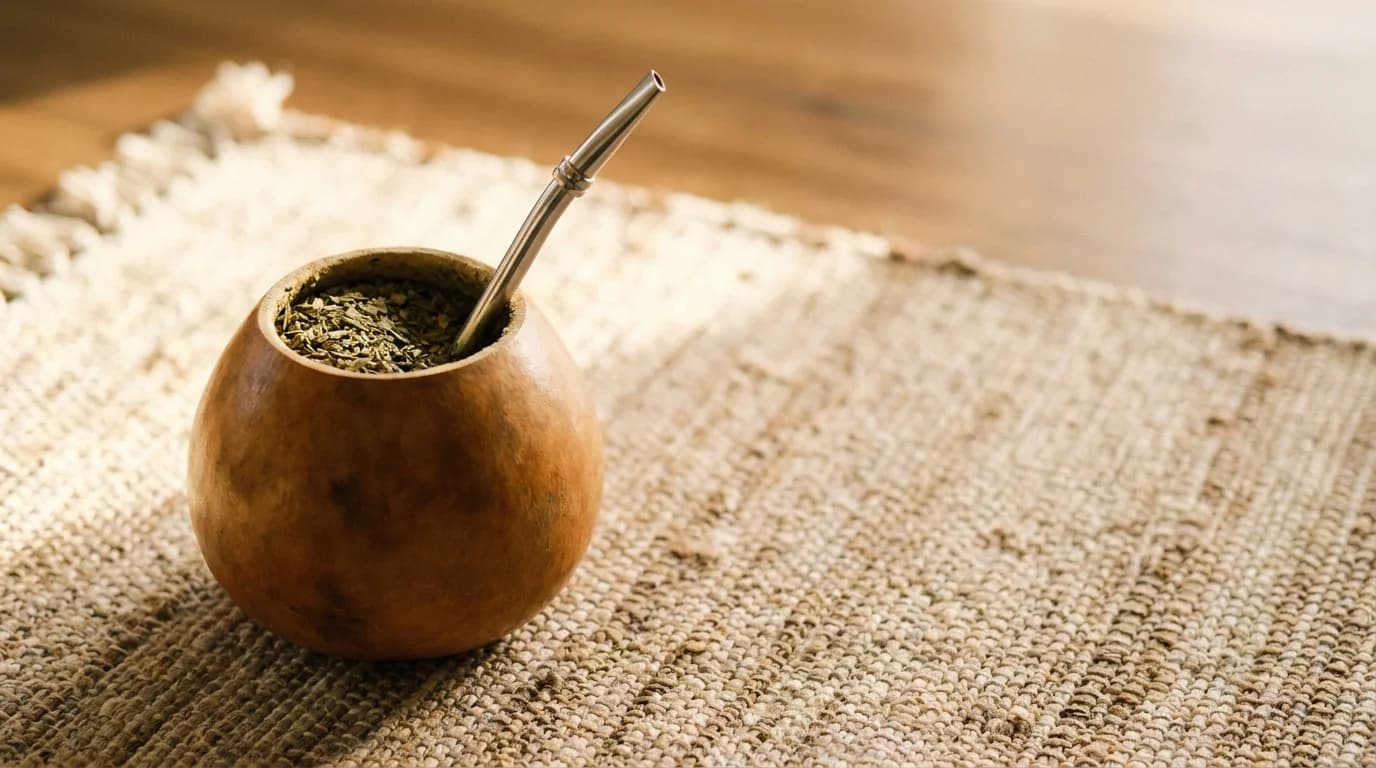
Yerba mate is one of the most-consumed caffeinated drinks on Earth, and one of the least familiar to most people outside South America. In Argentina, Paraguay, Uruguay, and southern Brazil it is closer to what coffee is in North America — a daily ritual, a social object, and the default source of morning caffeine. For a broader map of options beyond coffee, see our overview of coffee alternatives.
~80 mg
typical caffeine in a prepared cup of yerba mate — comparable to a cup of brewed coffee[7]
4 countries
Argentina, Paraguay, Uruguay, and southern Brazil account for the vast majority of world mate consumption[3]
Group 2A
IARC classifies very hot beverages, including mate above ~65°C, as probably carcinogenic — a temperature signal, not a mate-specific one[5]
What yerba mate actually is
Yerba mate is an infusion made from the dried, chopped leaves and small stems of Ilex paraguariensis, an evergreen tree in the holly family native to the subtropical forests of southeastern South America[1]. Commercial production is concentrated in the same region — Argentina, Paraguay, and southern Brazil — where the plant grows and where per-capita consumption of the finished product is highest in the world[3].
The processing pipeline is more involved than for most teas. Fresh leaves are subjected to a quick fire-curing step called sapecado that deactivates enzymes and locks in the green colour, then dried, aged (for weeks to years, depending on style), and milled to a coarse mix of leaves, stem fragments, and dust. The finished product looks somewhere between loose green tea and dried herbs, and pours easily into a cup or gourd.
The gourd, the bombilla, and the ritual
The traditional preparation is one of yerba mate's defining features and part of why it has resisted global commodification the way coffee and tea have not. The equipment is minimal but specific:
- The mate (gourd). A hollowed calabash gourd, cured with used yerba to build up flavour and character. Some drinkers use wooden, ceramic, or metal versions, but the calabash is traditional.
- The bombilla. A metal straw with a perforated bulb at the submerged end that acts as a filter, letting infused water through but blocking the leaves.
- The yerba itself. Packed into the gourd at an angle to leave one side loose, so hot water can be added into a small "well" without disturbing the whole mass.
Hot (not boiling) water is added, sipped through the bombilla, and the gourd is refilled dozens of times through a session. The temperature, the pour angle, the moisture of the yerba, and the etiquette of passing the gourd from person to person are all part of a shared cultural grammar in the mate-drinking countries[3].
Tereré is the cold-water version, especially common in Paraguay and northern Argentina in hot weather. It uses ice water (and often fresh herbs like mint or lemon verbena) instead of hot, and shifts the extraction profile toward a lighter, more refreshing cup.
Chemistry: caffeine, theobromine, saponins, polyphenols
Yerba mate is a genuine methylxanthine drink. Chemical analyses find three of the major xanthines in the leaves:
- Caffeine — the primary stimulant, at roughly 1–2% by dry weight in commercial yerba[7].
- Theobromine — the same alkaloid dominant in chocolate; present in smaller amounts than caffeine but contributes to the overall stimulant profile[1].
- Theophylline — found in trace amounts; too small to matter functionally at typical intakes.
The "mateine debate" — whether the stimulant in yerba mate is a distinct isomer with different effects — has been settled by modern chemistry. Mateine is caffeine. The chemical structure is identical[2]. The subjective difference many drinkers report ("cleaner," "less jittery") is more plausibly explained by the accompanying theobromine and the gradual, sip-by-sip dose curve of a long mate session than by any different molecule.
Beyond xanthines, yerba mate is unusually rich in saponins (which contribute the slightly foamy quality of a fresh pour and possibly some of the health-associated effects) and polyphenols, particularly chlorogenic acids — the same family of compounds that dominates coffee's antioxidant profile[1].
Figure
Caffeine per typical serving: mate vs common caffeinated drinks
Values in mg caffeine per serving
What mate tastes like
New drinkers usually describe mate as somewhere between green tea and alfalfa: grassy, vegetal, herbal, slightly bitter, with a slightly smoky note in traditional Argentine styles (where the drying step uses wood fire). Unaged or lightly aged yerba tastes fresher and greener; long-aged Uruguayan-style yerba can approach the earthy, tobacco-like depth of a well-aged pu-erh tea.
The bitterness is characteristic and unapologetic. Most traditional drinkers take it plain; sweetened versions exist and are common in Brazil, and adding sugar or lemon is not unusual in some regional styles. The commercial ready-to-drink mate market that grew out of Guayakí's US launch in the 2000s leans much sweeter and softer than what most South American drinkers would recognise as authentic mate.
Health research: what the evidence actually says
What the research says
Observational studies of mate drinkers in South America have associated regular, moderate consumption with favourable cardiovascular markers — including modest improvements in LDL and HDL cholesterol and reductions in some inflammatory markers[4]. The systematic review evidence is suggestive rather than definitive; sample sizes are small and confounders are hard to disentangle in populations where mate drinking is nearly universal.
Metabolic effects — weight, glucose, satiety — have been studied mostly in small trials with heterogeneous designs. Some show modest signals in favour of mate; others don't. The overall pattern is "possibly helpful, not clearly transformative"[2].
The best-supported concern is the temperature signal. The International Agency for Research on Cancer's 2016 evaluation (published 2018) classified drinking very hot beverages — above approximately 65°C — as probably carcinogenic to humans (Group 2A), based primarily on evidence linking very hot mate consumption to esophageal cancer in South American populations. Mate itself was classified as not classifiable as to its carcinogenicity to humans (Group 3). The signal is about temperature and thermal injury, not about mate as a plant[5].
A large case-control study from Uruguay found that risk of upper aerodigestive tract cancers was elevated in heavy hot-mate drinkers, particularly in combination with tobacco and alcohol use — the two strongest independent risk factors — but the temperature association persisted after adjustment[6].
The practical implication: mate at drinkable temperatures (below about 65°C, i.e. warm rather than piping hot), or cold as tereré, does not carry the same evidence signal. Waiting a few minutes after pouring, or drinking cold in summer, is the sensible response.
Modern forms and where to find it
Outside its traditional region, mate reaches most drinkers through a handful of formats:
- Loose yerba for gourd preparation. Brands like Cruz de Malta, Rosamonte, Playadito, Taragüi, and Canarias sell the traditional product. Argentine styles tend toward heavier stem content; Uruguayan yerba is more finely milled and typically aged longer.
- Guayakí and other North American brands. The Guayakí brand, founded in the late 1990s, popularised organic loose mate, bagged mate, and — most visibly — a sweetened canned "energy drink" version that dominates the US retail category. Mateína and others follow similar formats.
- Bagged mate. Individual tea bags of yerba are widely available and produce a lighter, tea-like infusion. Convenient, but not representative of the traditional cup.
- Ready-to-drink cans. Sweetened, sometimes carbonated, often fruit-flavoured; more soft drink than infusion, but a common entry point.
Brewing basics
For traditional gourd-and-bombilla preparation:
- Fill the gourd about two-thirds with loose yerba.
- Tilt it, pour a small amount of cool water into the "well" formed by the sloped yerba, and let it absorb for a minute (this protects the leaves from thermal shock).
- Insert the bombilla into the wet side.
- Add hot water — around 70–80°C (about 160–175°F), not boiling.
- Sip fully, then refill the same well. Repeat many times.
The first few pours will be strongest; the yerba gradually "washes out" over the session. A well-loaded gourd can be refilled dozens of times before the flavour goes flat.
For a simpler approach, brewed in a French press or tea infuser: use about 1–2 tablespoons of yerba per 8 oz of water, steep for 3–5 minutes at 70–80°C, and strain. The result is closer to a strong green tea than to a traditional gourd cup.
How mate compares to other coffee alternatives
Among caffeinated coffee alternatives, mate is the closest match to coffee's dose. Matcha and steeped green tea deliver less caffeine per serving; chicory delivers none at all. Mate lands squarely in the coffee range but with a very different flavour profile and — importantly — a ritual that is not about single cups. A mate session is measured in hours and shared sips, not in a rushed morning mug.
If you're comparing directly to coffee, see our dedicated yerba mate vs coffee breakdown for a head-to-head on caffeine, chemistry, and subjective feel.
Common misconceptions
- "Yerba mate has more caffeine than coffee." Sometimes yes, sometimes no. A single prepared cup is roughly comparable to a cup of drip coffee; a long mate session with many refills can exceed a single cup of coffee cumulatively, but that's dose over time, not per-serving strength[7].
- "Mateine is a different stimulant." No. It's caffeine. The name is a historical relic[2].
- "Mate causes cancer." The evidence is about very hot beverages in general, not mate specifically. Drink it warm rather than scalding and the signal drops out[5].
- "It's just South American green tea." Different plant family entirely — mate is a holly (Ilex), not Camellia sinensis. The chemistry, taste, and cultural role are all distinct.
The honest summary
Yerba mate is a genuine caffeinated drink with real chemistry and a serious ritual tradition. It delivers roughly coffee-level caffeine per prepared cup, alongside theobromine and a distinctive polyphenol-and-saponin profile. Population-level research is cautiously favourable on cardiovascular and metabolic markers. The main evidence-based caution is temperature — drink it warm, not piping hot.
If you're looking for coffee's dose without coffee's flavour, mate is one of the closest substitutes on offer. If you're drawn to the ritual — the shared gourd, the long session, the specific technique — that side of mate is where the drink is at its most distinctive, and where regular coffee has nothing comparable to offer.
Frequently asked questions
- How much caffeine is in yerba mate?
- A typical prepared cup of yerba mate contains roughly 80 mg of caffeine, though the range across preparations is wide — from about 30 mg in a light infusion to 180 mg or more in a strongly refilled gourd. That puts a standard mate cup in the same neighbourhood as an 8 oz cup of drip coffee.
- Is mateine the same as caffeine?
- Yes. 'Mateine' is an older folk term for the caffeine in yerba mate, once thought to be a distinct isomer with different effects. Modern chemical analysis confirms the stimulant in mate is standard caffeine, identical to what's in coffee and tea. The subjective difference many drinkers report is attributed to the accompanying theobromine, theophylline, and polyphenol profile — not a different molecule.
- Is yerba mate healthier than coffee?
- The evidence base is smaller than for coffee, but observational studies associate moderate mate consumption with lower cardiovascular risk markers and favourable lipid profiles in some populations. Neither drink is clearly 'healthier' than the other — both contain caffeine plus other bioactive compounds, and preference and tolerance matter more than population-level averages.
- Why is very hot mate linked to cancer risk?
- The International Agency for Research on Cancer classifies drinking very hot beverages — including mate above roughly 65°C — as probably carcinogenic to humans, primarily linked to esophageal cancer. The signal appears to be about temperature and thermal injury to the esophagus, not about mate itself. Mate consumed at cooler temperatures, and cold mate (tereré), do not carry the same association.
- How do you drink yerba mate traditionally?
- The traditional preparation uses a hollowed gourd (also called a mate) packed with loose dried yerba, into which hot water is added and sipped through a bombilla — a metal straw with a filter at the bottom. The gourd is refilled with water many times and often shared among a group, each person drinking their fill before it's refilled and passed on.
References
Every factual claim in this article is drawn from the sources below. See the source library for how we grade evidence.
- [1]Yerba Mate Tea (Ilex paraguariensis): a comprehensive review on chemistry, health implications, and technological considerationsJournal of Food Science · 2007 · Review · Tier 2 · Moderate
- [2]Recent advances on Ilex paraguariensis research: minireviewJournal of Ethnopharmacology · 2011 · Review · Tier 2 · Moderate
- [3]Yerba Mate — A Long but Current HistoryNutrients · 2020 · Review · Tier 2 · Moderate
- [4]Ilex paraguariensis extracts and cardiovascular disease: results of a systematic reviewPhytotherapy Research · 2018 · Systematic review · Tier 1 · Strong
- [5]IARC Monographs on the Evaluation of Carcinogenic Risks to Humans, Volume 116: Drinking Coffee, Mate, and Very Hot BeveragesInternational Agency for Research on Cancer (WHO) · 2018 · Agency guidance · Tier 1 · Strong
- [6]Risk of upper aerodigestive tract cancers according to mate drinking, alcohol drinking, and tobacco smoking habits in UruguayCancer Causes & Control · 2009 · Observational study · Tier 2 · Moderate
- [7]Health properties of Yerba MateNutrients · 2020 · Review · Tier 2 · Moderate
- [8]Spilling the Beans: How Much Caffeine Is Too Much?U.S. Food and Drug Administration · 2024 · Agency guidance · Tier 1 · Strong
- [9]Caffeine in foodsHealth Canada · 2022 · Agency guidance · Tier 1 · Strong
Related reading
- Coffee AlternativesCoffee Alternatives: A Guide to What Actually Works→
- Coffee AlternativesMatcha vs Coffee: Caffeine, L-Theanine, and Differences→
- Coffee AlternativesChicory Coffee: A Complete Guide→
- Coffee AlternativesYerba Mate vs Coffee: Caffeine, Effects, Differences→
- Coffee AlternativesGuayusa: The Amazonian Caffeine Leaf→
- Coffee AlternativesDandelion Root Coffee: A Complete Guide→