Pour-Over Coffee Guide: Ratios, Bloom, and Technique
By Coffee Studies Editorial·Published July 15, 2026·6 min read
Quick answer
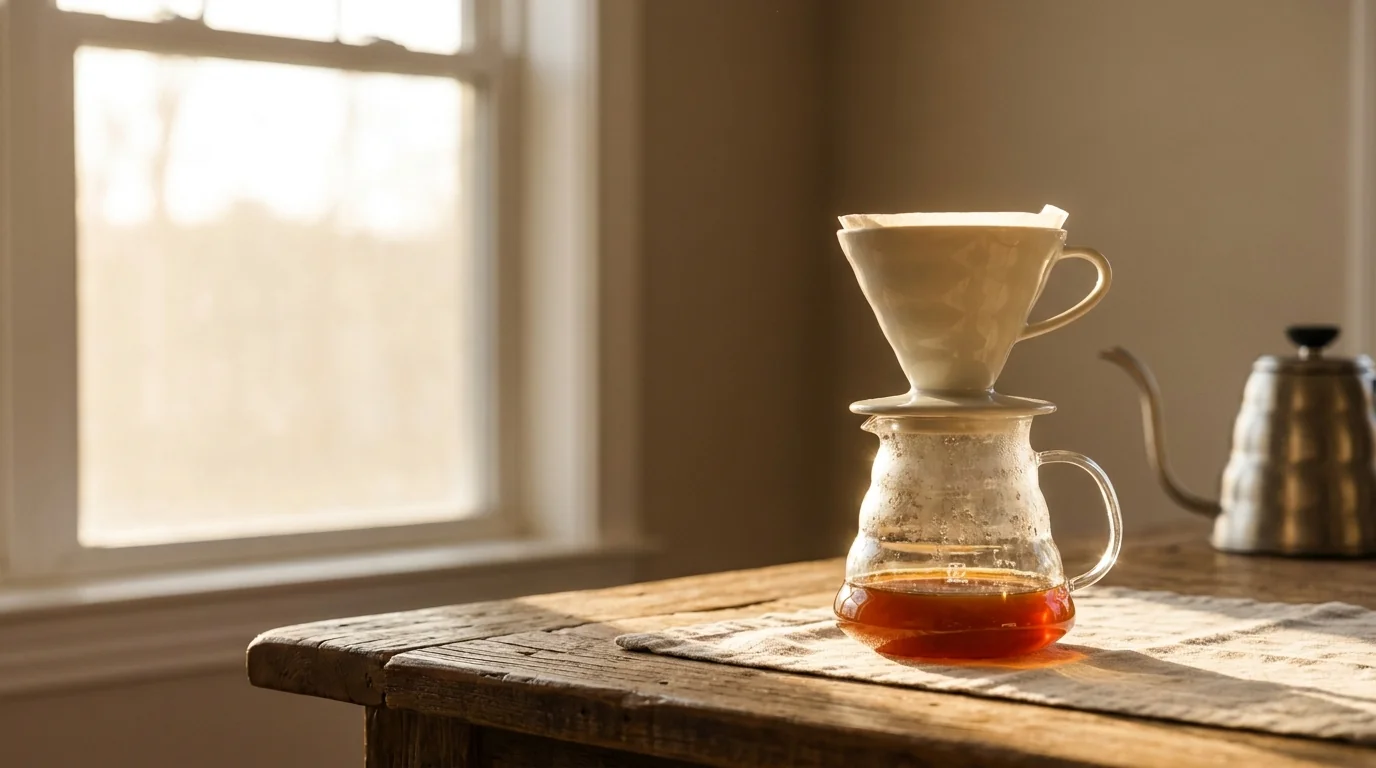
Pour-over coffee is what happens when you take the idea of drip brewing and put it entirely in your hands. Instead of a machine controlling temperature and pour rate, you do — which is why the same beans can produce a better cup from a well-executed pour-over than from a machine, and a worse cup from a sloppy one.
1:16
a solid default pour-over ratio — 22 g coffee to 350 g water for a 12 oz cup[3]
3–4 min
typical total pour-over brew time for a single serving[1]
Grind + pour
the two variables that dominate pour-over flavour once you have the ratio right[2]
What you need
Essential:
- A dripper — Hario V60, Kalita Wave, or Chemex are the classic options. V60 is the most popular; each has slight differences in how quickly water flows through and how you pour.
- Paper filters — matched to your dripper. V60 filters fit V60 drippers; Chemex uses much thicker filters that fit only Chemex.
- A scale — reading to at least 1 gram. Under $20.
- A burr grinder — much bigger flavour difference than any dripper choice.
- A vessel — a carafe or mug the dripper sits on top of.
Highly recommended:
- A gooseneck kettle — gives you the slow, controlled pour rate pour-over depends on. Electric temperature-control kettles are ideal but not required.
- A timer — a phone timer is fine.
The three drippers and a kettle
 Cone dripper, 60-degreeHARIO V60 Ceramic Coffee Dripper, Size 02, White | Handmade Porcelain Coffee Maker with Conical Shape and Spiral Ridges for Heavier FlavorThe reference cone: steep walls, one large hole, and spiral ribs that keep the paper off the wall so air can escape. All three features hand flow control to the person pouring, which is why the V60 rewards technique and punishes inattention.amazon.com $25.00 USDamazon.ca $32.00 CADPrice and availability as of View on Amazon
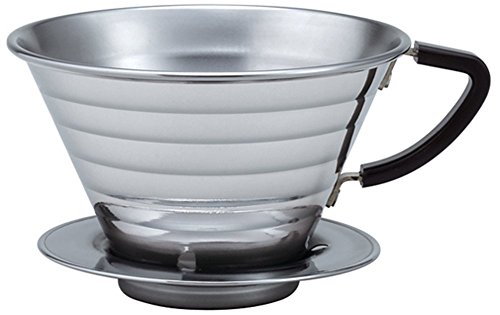 Flat-bottom dripper, three holesKalita Wave 185 DrippersA flat bed and three small holes instead of one big one, so the restriction is in the dripper rather than in your pour. That makes the result far more repeatable than a cone and far less responsive to technique, which is either the whole appeal or the whole objection.amazon.com $39.80 USDamazon.ca $65.16 CADPrice and availability as of View on Amazon
 Dripper and carafe in one pieceChemex Pour-Over Glass Coffeemaker - Classic Series - 6-Cup - Exclusive PackagingA cone with a much thicker bonded filter and a sealed glass body. The filter is the design decision: it traps more oils and fines than any other paper in common use, giving a very clean, tea-like cup, and it slows the brew down enough that grind has to be coarser than a V60's.amazon.com $47.03 USDamazon.ca $70.00 CADPrice and availability as of View on Amazon
 Variable-temperature gooseneckCosori Gooseneck Electric Kettle with Temperature Control, 0.8L, Black | No Plastic Contact with Water, 5 Presets, 60-Min Keep Warm, Pour Over Coffee & Tea, Stainless Steel Interior, 1200WThe spout gives you a slow, placeable stream, which is most of pour-over technique. Temperature control matters less than people assume at fixed extraction, but it removes a variable while you are learning, and it is the difference between guessing and knowing what went into the cup.amazon.com $62.99 USDamazon.ca $85.49 CADPrice and availability as of View on Amazon
Product prices and availability are accurate as of the date/time indicated and are subject to change. Any price and availability information displayed on Amazon at the time of purchase will apply to the purchase of this product. Certain content that appears on this site comes from Amazon. This content is provided ‘as is’ and is subject to change or removal at any time.
The standard recipe
For a 12 oz cup (350 g of water):
- Boil water. Aim for 93-96 °C. If you don't have a temperature-controlled kettle, boil the water and let it sit for about 30 seconds off the heat.
- Grind 22 g of coffee. Medium — like the texture of coarse sand or kosher salt.
- Set up. Place the filter in the dripper, dripper on top of your carafe or mug on the scale.
- Wet the filter. Pour a small amount of hot water through the empty filter to rinse it and preheat everything. Pour off the rinse water.
- Add ground coffee to the filter. Give the dripper a gentle tap to level the grounds.
- Zero the scale.
- Bloom. Start your timer. Pour 44 g of water (twice the coffee weight) in a slow circle over all the grounds. Wait 30-45 seconds — the coffee will bubble and expand.
- Main pour. Pour slowly in gentle circular motions from the center outward, keeping the water level up but not overflowing. Add the remaining water to reach 350 g total.
- Let it drain. Total time should be about 3-4 minutes.
- Remove the dripper. Discard the filter and grounds.
The finished cup should have a clean, sweet, layered flavour — much more nuanced than most drip machines produce because you controlled every variable.
Grind size — the primary lever
Medium grind is the starting point, but pour-over is quite grind-sensitive. Adjust based on brew time:
- Total time under 2:30: grind finer. You're under-extracting — coffee tastes sour, thin, or weak.
- Total time 3:00 - 4:00: probably the right grind. Adjust to flavour.
- Total time over 4:30: grind coarser. You're over-extracting — coffee tastes bitter, dry, or astringent.
Small changes make a big difference — one click finer on a burr grinder can shift the finished cup noticeably.
Pour technique
Water needs to be distributed evenly over the coffee bed. Uneven pouring produces channeling — water finds a fast path through the grounds, over-extracts along that path, and under-extracts the rest of the coffee. Channeling is one of the main things a gooseneck kettle helps you avoid.
Good pour habits:
- Slow, controlled stream. The water should look like a thin, steady line. Not a splash, not a drip.
- Circular motion from center outward. Never pour directly onto the filter's edge — that's channeling waiting to happen.
- Keep the water level up. Don't let the bed fully drain between pours — the coffee should stay wet throughout the main pour.
- Multiple small pours, not one big one. Common patterns: bloom, then three or four pours of about 60-80 g each.
Troubleshooting the cup
Sour, thin, weak:
- Grind finer
- Water too cool (aim for 95 °C)
- Brew time too short (< 2:30) — usually a grind fix
- Bloom not fully wetting all grounds
Bitter, harsh, dry finish:
- Grind coarser
- Water too hot (turn kettle off boil for 30-45 sec)
- Brew time too long (> 4:30) — usually a grind fix
- Uneven pour causing channeling and over-extraction of some grounds
Ok but boring, one-dimensional:
- Better beans. Pour-over rewards good coffee and reveals mediocre coffee. Try a fresher, higher-quality single-origin bean.
Muddy or gritty:
- Filter torn — use a fresh one
- Grind too fine, some fines passing through
- Chemex filters filter finer than V60; try Chemex if this bothers you
V60 vs Chemex vs Kalita Wave
The three most popular pour-over drippers approach the same job differently:
Hario V60:
- Conical shape, single large hole at the bottom
- Fast flow, sensitive to pour technique
- Highlights brightness and clarity
- Most popular for a reason — versatile once you learn it
Chemex:
- Larger, elegant carafe with integrated brewer
- Thick filter — cleaner, less-bodied cup
- Slower flow, more forgiving pour technique
- Best for brewing multiple servings
Kalita Wave:
- Flat-bottomed with three small holes
- Very forgiving — bed shape reduces channeling risk
- Consistent results without perfect technique
- Best entry-level pour-over dripper for most people
There is no objectively best dripper. Each produces a slightly different flavour profile from the same beans.
Method-specific notes
A 2013 European Food Research and Technology study compared nine coffee extraction methods including drip-based methods on identical beans. Different methods pulled out different proportions of key compounds — chlorogenic acids, caffeine, volatile aromatics — showing that "same coffee, different method" produces genuinely different cups[1].
Pour-over specifically tends to produce a cleaner, brighter, more nuanced cup than automatic drip machines, largely because of better extraction control:
- Better temperature stability. You control the water; a machine's shower head sometimes doesn't reach ideal brewing temperature.
- Better distribution. A skilled pour hits every part of the coffee bed evenly.
- Fresh preparation. You grind and brew in one motion, minimising staling.
Common misconceptions
- "Pour-over is complicated." The recipe is genuinely simple: bloom, pour, wait 3-4 minutes. Precision helps but isn't required for a good cup.
- "You need to spend a lot of money." V60 dripper ($20-30), filters ($10), scale ($15-25), gooseneck kettle ($40-100), burr grinder ($100-200). Total under $250 for excellent pour-over.
- "The dripper brand determines the flavour." Beans matter much more. A V60 with mediocre beans is worse than any dripper with great beans.
- "Pour-over is only for specialty coffee." Any coffee benefits from careful brewing. Even commodity supermarket beans taste better via pour-over than most auto-drip machines.
Which dripper to brew it in, and what each geometry changes, is in pour-over coffee makers.
The methods, in one place
 Home brewing method by methodHow To Make The Best Coffee At HomeCovers the methods a home kitchen actually uses, with the ratios and the reasoning rather than a single prescribed recipe. Useful if you brew several ways and want one consistent explanation of why each one behaves as it does.amazon.com $15.19 USDamazon.ca $28.99 CADPrice and availability as of View on Amazon
Product prices and availability are accurate as of the date/time indicated and are subject to change. Any price and availability information displayed on Amazon at the time of purchase will apply to the purchase of this product. Certain content that appears on this site comes from Amazon. This content is provided ‘as is’ and is subject to change or removal at any time.
The honest summary
Pour-over is the highest-ceiling home brewing method — the technique that most rewards attention and freshness. Get the ratio right (1:16 is the safe default), grind medium and adjust based on brew time, and pour slowly in even circles. Most flavour problems are grind or pour issues, not recipe issues. A cheap V60, a scale, and a gooseneck kettle will get you further than any expensive drip machine.
Frequently asked questions
- What's the best ratio for pour-over?
- 1:15 to 1:17 works for most beans and drippers. 1:16 is a solid middle default — 22 g of coffee to 350 g of water for a 12 oz cup. Stronger drinkers lean to 1:15; those who want cleaner and lighter go 1:17.
- How long should a pour-over take?
- For a 12 oz cup with about 22 g of coffee, total time from first pour to last drop is usually 3-4 minutes. If it's faster, grind finer. If it's slower, grind coarser. Contact time is one of your extraction levers.
- What's the bloom and why does it matter?
- The bloom is the initial small pour that wets the coffee and releases trapped CO2 from roasting. Without a proper bloom, that CO2 bubbles through your brew and creates uneven extraction. Pour twice the coffee's weight in water, wait 30-45 seconds, then continue.
- Do I need a gooseneck kettle?
- It helps significantly. Pour-over depends on controlled water flow — a gooseneck kettle gives you the slow, steady pour rate you need. You can pour-over without one, but expect less consistency until you upgrade.
References
Every factual claim in this article is drawn from the sources below. See the source library for how we grade evidence.
- [1]Comparison of nine common coffee extraction methods: instrumental and sensory analysisEuropean Food Research and Technology · 2013 · Controlled trial · Tier 2 · Moderate
- [2]Coffee extraction kinetics in a well mixed systemJournal of Mathematics in Industry · 2016 · Review · Tier 2 · Moderate
- [3]Brewing FundamentalsCoffee Science Foundation · Reference work · Tier 2 · Moderate
- [4]Effects of brew strength, brew yield, and roast on the sensory quality of drip brewed coffeeJournal of Food Science · 2020 · Controlled trial · Tier 2 · Moderate
Related reading
- Brewing ScienceCoffee-to-Water Ratio Explained→
- Brewing ScienceCoffee Grind Size Guide: Which Grind for Which Method→
- Brewing ScienceCoffee Extraction Explained: TDS, Solubles, and Yield→
- Brew MethodsChemex vs V60: Which Pour-Over Makes Better Coffee?→
- Brew MethodsCold Drip Coffee: How Slow Drip Differs from Cold Brew→
- Brew MethodsPhin Coffee: How Vietnam's Single-Cup Filter Works→